
Melexis is a global supplier of micro-electronic semiconductor solutions. The company was founded more than 30 years ago in Belgium and has expanded its global footprint to 19 locations in 3 different continents: Europe, Asia Pacific and Americas.
As a world leader in automotive semiconductor sensors, Melexis has used its core experience in creating chips for vehicle electronics to expand the product portfolio that includes sensors, driver ICs and wireless devices to also meet the needs of smart appliances, home automation, industrial and medical applications. And now, the company is preparing for the future, investing in manufacturing, R&D, new products and developing new skills for its workforce. In an exclusive report for Automotive Tomorrow, Veerle Lozie, COO/CIO Melexis and Ivan Chernov, Global Production Manager Melexis explain the company’s approach to digitalization, automation, Industry 4.0, supply chain disruptions, chip shortage, electrification and the next chapter for Melexis in Bulgaria, one of the company’s key manufacturing sites.
The digitalization and automation journey
Global uncertainties, especially price wars, and COVID-19 pandemic have resulted in the last 18 months in new operational and technological challenges, as well as potential opportunities for industries across the board. And automotive manufacturers have been integrating digital technologies into their processes from product design, procurement, production, supply chain, all the way to sales and marketing. According to Ivan Chernov, Global Production Manager Melexis, digital transformation and Industry 4.0 have brought an incredible boom in new technologies that provide endless opportunities and the freedom to reorganize the productions in a whole new way. But as he points out “companies need to think how these technologies will affect the work process of the employees, and whether they will not require new competencies for the people. The need for new skills may require prior preparation of programs – the focus will increasingly be on software skills and the ability to handle information and data, or on solving problems instead of doing monotonous and repetitive tasks.” This is why Melexis has a team focused on the study of technologies such as machine learning, big data and artificial intelligence. “The main goal is to find out more about them and how we can use them. The technology is already here and at Melexis we have examples of algorithms and applications developed by colleagues that have helped us increase quality and reduce production costs,” he adds. The company has started the automation process years ago and will continue to invest for its own manufacturing floors. The increased use of robots and cobots equally offers some business opportunities, as there are many sensors in this type of industrial applications. “We have seen an evolution from responsive maintenance over preventive maintenance towards predictive maintenance in Industry 4.0. Thanks to sensors, maintenance teams can predict which part of the industrial equipment will fail and needs replacement (based on temperature, vibrations, position, etc). Preventive maintenance lowers the overall costs of industrial maintenance and prevents line outages,” says Veerle Lozie, COO/CIO Melexis. But with opportunity comes also responsability, and challenges, the biggest one being to ensure 24/7 operations and having the necessary skills in house to maintain the systems.
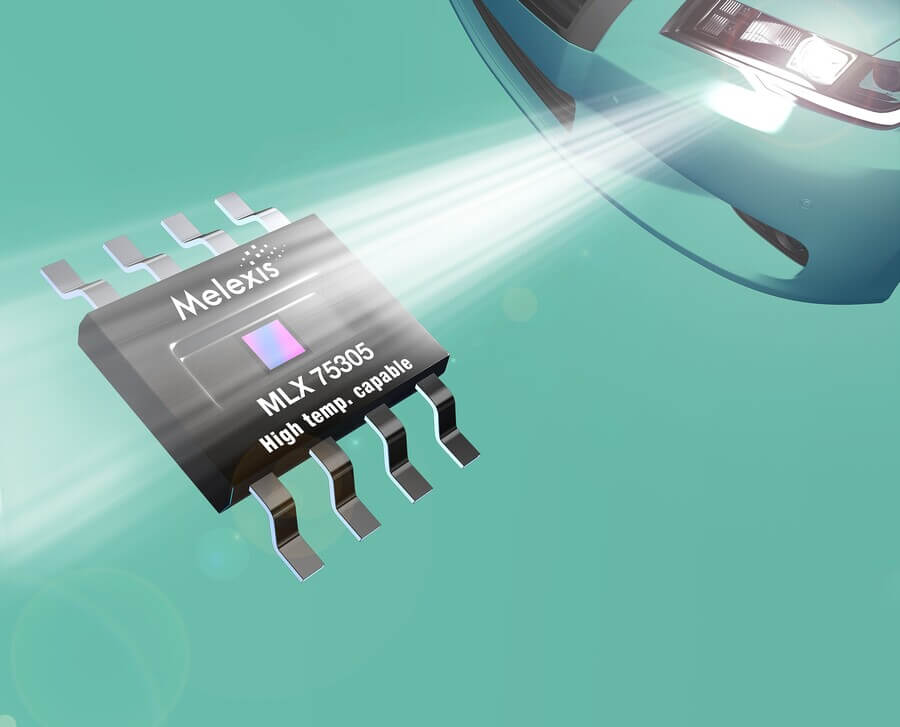
Cycle times for semiconductors have increased by 50 to 100% since the pandemic.
But is this the death of the just-in-time concept, as many in the industry have already stipulated? “JIT sure seems out of synch with the capacity constraints and long cycle times of semiconductors that are increasingly more complex. Cycle times in normal times are anywhere from 12 to 26 weeks, in the current environment, supply chains are queuing and accumulating waiting times. Cycle times increase by 50 to 100%, so we can be lucky if we achieve 20 weeks and mostly it goes way above 40 weeks. Building additional capacity takes even more time. In the shortterm, only industry-wide collaboration can help and that’s also what Melexis is doing with its customers and its customers’ customers. Unfortunately, shortterm-thinking is surging because of COVID19 jo-jo effects and geopolitical turmoil, subsequently leading to hoarding behaviour. There are no easy fixes to the current supply constraints and we expect the visibility throughout the chain up to the OEM, which is not easy, because of the many tiers and the typical hoarding behaviour of just about everyone in the value chain.”, explains Veerle Lozie.
Collaboration- the only way to stabilize the supply chain
In the automotive industry, 2021 was all about microchip shortage and supply chain disruptions, and for a chip manufacturer, its hasn’t exactly been a walk in the automotive park. But, as the Melexis COO emphasises, partnering with both customers as well as suppliers was and still is the only way to stabilize the worldwide supply chain and get through a crisis like the microchip shortage. “At Melexis, we strive to look and manage all aspects in the best way possible. Thanks to our financial health, we kept our inventory high during the low chip demand period last year, as a lesson learnt from the last automotive crisis back in 2008” explains Veerle Lozie. As a result, the company was able to make a realistic commitment to its customers in terms of deliveries. “After the demand picked up again, our first action was to understand what was driving this demand. This is what we have been doing at Melexis by working closely with our customers (Tier 1&2), but also by talking to OEMs to understand what is behind the orders, what are the applications and also what are their levels of inventory. Those elements remain crucial and a continuous focus, still today, to be able to prioritize and serve our customers in the best way,” she argues. This has been no easy task at hand, with Q2 being probably the worst in terms of managing customers’ expectations. “We have risen well to the challenge of allocating the available material fairly across our customer base. Order behavior of the customers keeps going strong. Customers accept difficulties and try to navigate through it by being creative in how they deal with shortages,” she says, adding that to continue well into the end of 2021 is a challenge.
What the future holds?
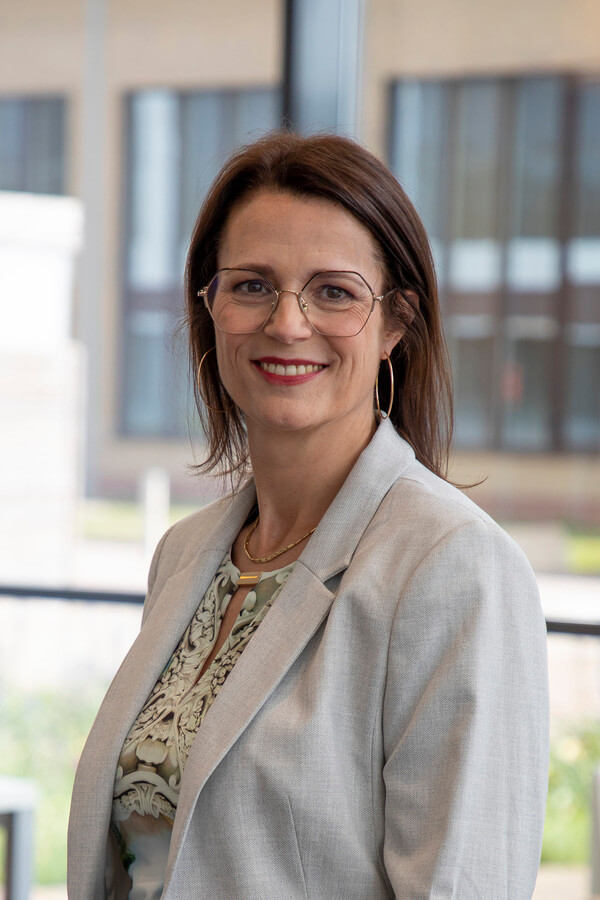
Veerle Lozie, COO/CIO Melexis
Electrification and autonomy, two of the trends in the automotive industry, are having a major impact on the architecture of the car, on how the data processing will be organized and how the hardware and software will co-exist. Software will play a much bigger role in cars of tomorrow and calls for a revolution already started at the vehicle manufacturers. At chip level, the electrification is requiring more power and high efficiency. So, technologies like Silicon Carbide (SiC) or Gallium Nitride (GaN) which enable high voltage operations integrated with standard Silicon chips is a major trend. On the autonomous vehicle, the chips will integrate more processing power for energy efficiency and real time reaction. Tiny-AI or Edge-AI are technologies attempting to shrink complexity of data processing algorithms, based on machine learning, deep learning, etc., in order to displace the computation from the cloud to the edge. Melexis is actively looking at those technologies and we are already involved in R&D activities in both areas.
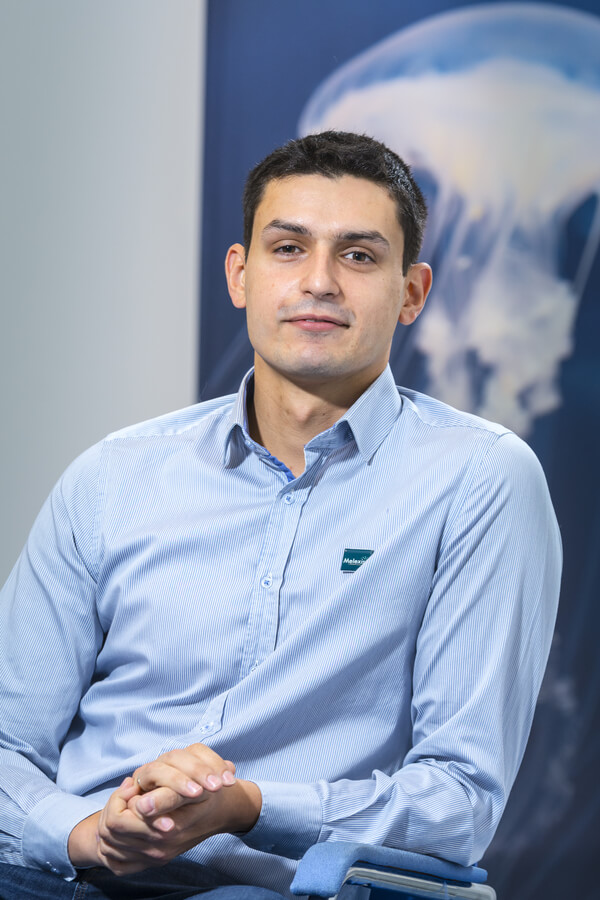
Ivan Chernov, Global Production Manager Melexis
When the world evolves to 100% EVs, we will be beyond 2030. A large part of our powertrain business linked to the combustion engine is, of course, at risk and the relevant parts will be replaced by energy and thermal management sockets. Other powertrain challenges could pop up as well, in a race for more range or battery-less vehicles (e.g. Fuel Cell). Our application engineers and system engineers must capture the main requirements linked to the EV. Once those requirements are correctly translated for the designers, the main challenge is not the move from ICE to EV. We develop sensors: treatment of the signal stays the same. More challenging is having a multidisciplinary team with the different competencies needed. In the ‘old times’, an engineer could have everything done by himself. Now you need different capacities around the table. In order to develop a product, you need knowledge about software, assembly, analogue and digital design. For our engineers the real challenge is the increase of complexity, not the switch from ICE to EV. This complexity demands more knowledge and competences. It’s an opportunity for our engineers to develop new competences and broaden their horizons.
New investments in Bulgaria
Melexis first started its operations in Bulgaria in 2000 and in more than 20 years, the Bulgarian entity has developed more than 70 products. The company has expertise in several product areas – magnetic sensors, temperature sensors and current sensors. “There is a recent example of 2 new products in the field of current sensors, which were developed in Sofia and this year we are launching on the market. They find application in many modern electrified cars and are involved in the efficient management of their batteries,” says Ivan Chernov. In July 2018, the company announced the expansion of its new facility in Sofia, which spreads over 15,000 sqm. The expansion was added to the existing site of 7,500 sqm. The total investment is projected to around 75 million euro. “The extension of the production was the starting point for this big investment and the production space capacity is tripling now with the new building, while further automation is presented via the automated storage solution in the warehouse. New ways, formats and tools will organize the daily activities in the office areas, i.e., the “Activity based working” model for offices. Our teams are growing, also adding new roles. As an example, the new building will allow us to extend the laboratory spaces – crucial for innovation and problem solving. We will also extend our local expertise with a Reliability lab. Melexis has 11 product lines, and 3 are in Sofia. We are developing between 15 and 20 new products per year at Melexis, from which, on average 1/3 is realized out of the 3 product lines in Sofia. With the new building we will grow organically those 3 product lines by adding extra teams. Considering the learning curve of those teams and the long development cycle time of an IC, we should expect + 20% of innovative products within the next 5 years,” explains Ivan Chernov. Melexis sales for the first half year of 2021 were 314.7 million EUR, an increase of 32% compared to the first half year of 2020. Sales to automotive customers represented 88% of total sales, in the second quarter as well as in the first half of 2021. For the full year 2021, Melexis expects a sales growth between 24% and 27%.
In +20 years in Bulgaria, Melexis has delivered over 5 billion chips to customers all over the world.