
Just a little bigger than a coin the size of a quarter, semiconductor chips or rather the lack thereof have brought the production of vehicles across the world to a halt for a year now, and by the likelihood of it, things are not getting better anytime soon. The situation is expected to continue well into 2022, some experts arguing that 2023 is a more realistic timeframe for the end of this supply chain crisis, affecting other industries as well.
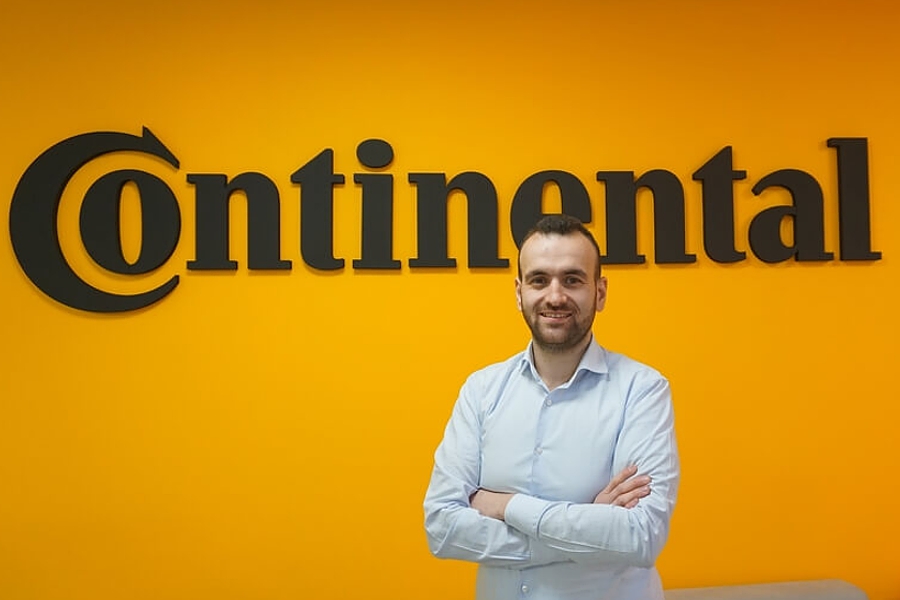
This is not an easy task to navigate for supply chain teams, who basically have been putting out fires for a very long time, all across the world, in a perfect example of a “perfect storm” in the supply chain, and a valuable lesson for the entire industry. “The actual semiconductor production (back-end) is not the bottleneck, the wafers (front-end) are, and they are manufactured by the large foundries for the semiconductor industry”, explains Bogdan Suciu from Continental Automotive Sibiu. As a Lead Global Allocation Manager ASCM NR RA AM, his job is to ensure that all Continental plants, business units and customers are treated fairly in case of a shortage situation, with the ultimate goal to avoid any customer line stops. The same applies for his team, which currently comprises 16 colleagues just in the plant in Sibiu, and another team of 9 colleagues in Regensburg, Frankfurt and Sibiu Continental plants, which report directly to him.
Unofficially, he is known as a fixer, meaning that it doesn’t matter how, when or what goes wrong somewhere in the world, it is part of his job to help fix the issue and reduce the impact for the Continental supply chain. “That’s why, whenever I watch the news or get alerts from different platforms on events happening anywhere in the world, I instantly think about how that will impact us”, he says, adding that all of his colleagues “are sometimes miracle workers”. In an interview for Automotive Tomorrow, Bogdan Suciu talks about lessons learned, risk management strategies, as well as the importance of an industry-wide collaboration to avoid such a shortage in the future.
Automotive Tomorrow: What has the pandemic, and especially the microchip shortage crisis taught you about supply chain and risk management?
Bogdan Suciu: The situation remains fluid and Continental is making every effort to bring the situation back to normal as soon as possible. Internal Task Force teams are analyzing the root causes and compiling the lessons learned from the recent shortages which will help us standardize and improve our processes to be able to react more effectively in the future. Sharing long-term, reliable and accurate forecasts and binding orders to match supplier lead times is the only way to really ensure that our supply chain runs smoothly. Moreover, it is critical that we are always in close contact with our customers and suppliers, and communicating openly, transparently and in a timely manner with them. Agility and speed are of critical importance. A number of elements are being considered to prevent a similar situation in the future, for example: better capacity planning from customer to suppliers, committed volumes, additional investments, increased flexibility and higher stock position to react on changes. However, certain situations are beyond our control, like a pandemic or disasters such as the earthquake in Japan or the ice storm in Texas. These events have further exacerbated the ongoing semiconductor shortage. Personally, I am proud to see that in times of need, the entire organization has rallied and is providing outstanding commitment to ensure customer satisfaction to the best of our ability.
Automotive Tomorrow: What tools and processes would you say have helped you navigate the microchip shortage crisis?
Bogdan Suciu: We are in close contact with our customers and suppliers and communicating openly and transparently. We are pursuing a number of alternative solutions including sourcing from other sources where possible, buying capacity at higher prices, etc. Our already well-established material shortage management processes and tools have been a great basis in order for us to start identifying, containing and mitigating the potential impact to Continental and its stakeholders. In 2019, Continental won the VDA Logistics Award for the MSM12h (Material Shortage Management) process and tools, thus showing that we were already committed to provide bestin-class support and are trying to stay one step ahead of whatever might impact our supply chain.
Automotive Tomorrow: What are Continental and you focusing on at the moment in your risk management strategy? Can you give us an example of one new best practice and new procedure implemented as a result of the developments in the last 18 months?
Bogdan Suciu: Open and transparent communication is key in this situation. For example, we provide a regular update of production and delivery schedule to customers. We are closely monitoring customer demand and aligning volumes precisely with customer plants. We work with affected customers and align adjustments in production volumes and / or product mix, if necessary. We are communicating daily with suppliers to keep track of production and shipment schedules and monitor bottlenecks. We are in negotiation with specific suppliers for supply volume increase and capacity expansion. We are investigating other solutions including alternative sourcing where possible, etc. We are also looking at alternative material, wafer, different chip suppliers/variants. We provide additional investment in further capacities. We support our suppliers in their negotiations with the sub-suppliers.
Automotive Tomorrow: What challenges does the electric vehicle era bring for the automotive industry and for global allocation teams?
Bogdan Suciu: The electric vehicle trend is nothing new in the automotive industry and it does come with some challenges. In reality, the entire industry has seen a rise in demand for a large electronic component base, in the past 10-12 years. If we look today at vehicles from any class (from a small city car to the premium & luxury sector), we all want more “gadgets” and features in our cars. Heated seats, high-tech infotainment and cruise-control are no longer seen as optional features only used by their flagships for a lot of vehicle manufacturers. Therefore, I think that we are prepared for mostly whatever the industry and the world can throw at us. Innovation will definitely be key in all fields, including supply chain improvements.
Personally, I feel that the whole industry has learnt from the semiconductor crisis and is coming up with different solutions. The next step forward now is to get the major players to merge those potential solutions into an industry-wide best practice. Associations such as the VDA and other automotive organizations can play a key role in bringing the right stakeholders to the round table. I believe that, in some cases, the current situation has taught us that in collaboration with our business partners, we can successfully shape the future of mobility.