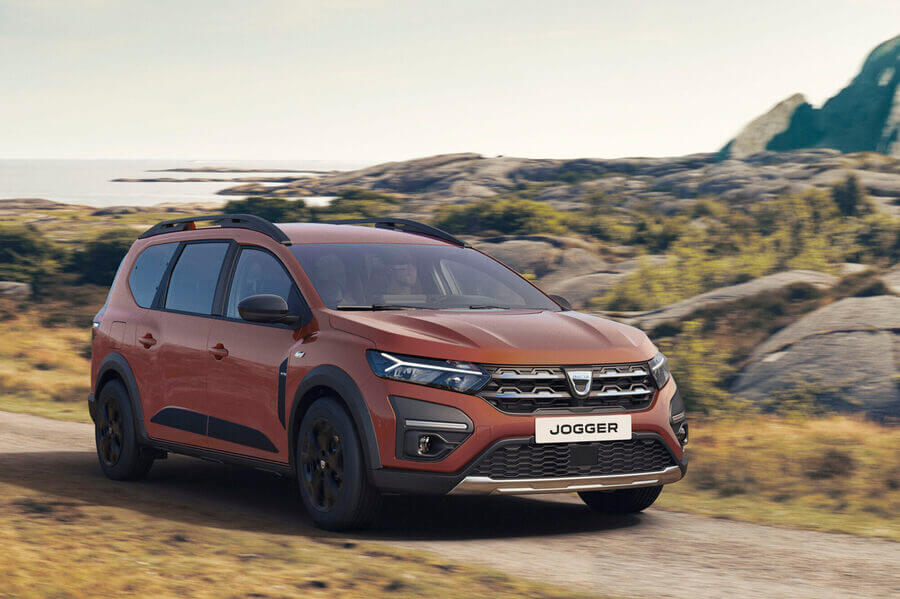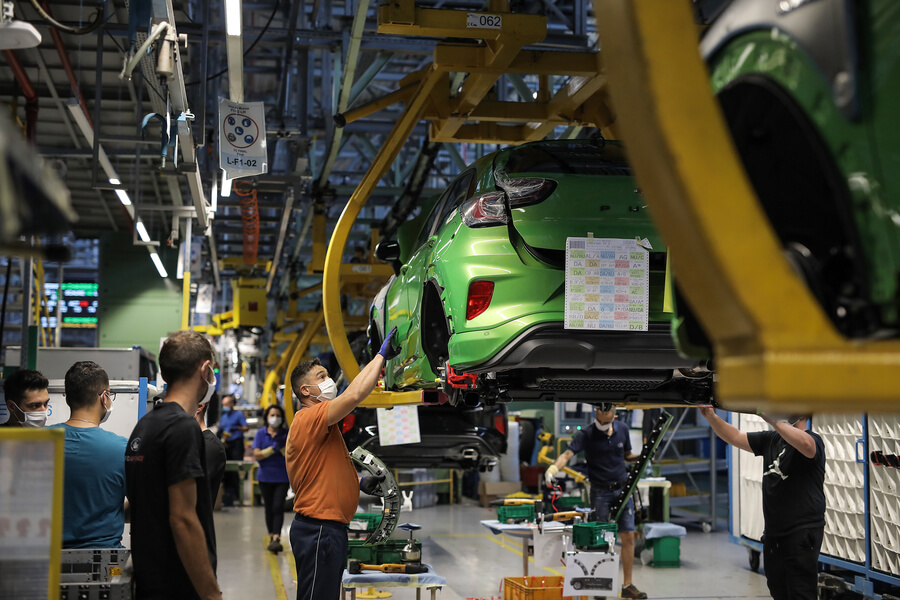
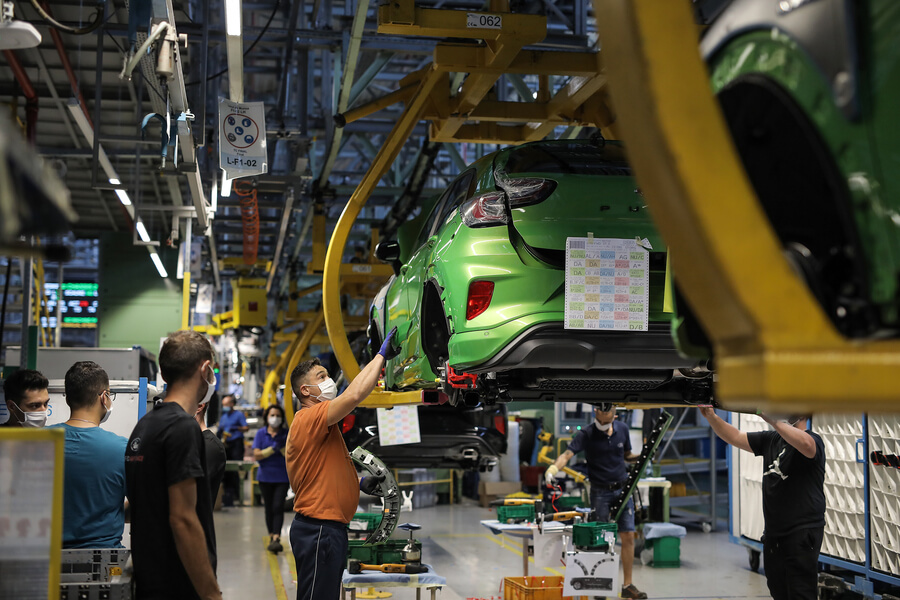
2022 has become a benchmark for vehicle production in Romania, according to ACAROM – the Romanian Automobile Manufacturers Association. More than half a million cars (509.000 units) left Dacia and FORD factories in 2022. That is 21% above the production volumes from 2021 and + 3.9% compared to the results from 2019, the previous record year for local car production – 490,412 units.
From the Dacia plant in Mioveni left 314.228 cars in 2022, while FORD Otosan plant in Craiova manufactured 195.237. In an interview for Automotive Tomorrow, Adrian Sandu, General Secretary ACAROM talks about the highlights in the automotive industry in Romania in 2022, the outlook of this vital sector for the Romanian economy in 2023 and how is ACAROM supporting its members during these challenging times.
Automotive Tomorrow: How would you describe 2022 for the automotive industry in Romania, in terms of evolution and challenges?
Adrian Sandu: While 2022 was a record year for vehicle production, the same cannot be said for the Tier I, Tier II suppliers. In terms of car component production, turnover increased compared to 2021, but from our estimates did not reach the level of 2019 given the fact that many plants in Western Europe had production downtime and as such so did suppliers in Romania. The production was affected not only by the microchip crisis, but also because of the RussiaUkraine war, which in the first part of 2022 put additional pressure on component suppliers with locations in Ukraine and Russia. Manufacturing flows had to be adjusted, and new sourcing locations had to be identified in Europe or other parts of the world. Also, the war and the subsequent energy crisis that followed in Europe created additional challenges for the automotive sector, especially for the plastics and mechanical processes, high-energy consumption sectors. These costs have increased dramatically, there were companies that paid 2.700 lei (over 500 euro) for a MWh, which was unsustainable and deeply affected their competitiveness. We, as ACAROM, together with other professional organizations, from other sectors had discussions with the Energy Ministry, ANRE (The National Authority for Energy Regulation) in order to identify solutions. In January 2023, there was a new government decision that established a cap for energy price at 1.300 lei MWh (approx. 260 euro), but companies can purchase energy at an even lower price now, so this issue is improving slightly.
Automotive Tomorrow: Taking all this into consideration, what is the outlook for 2023 for the automotive industry in Romania?
Adrian Sandu: The outlook is positive at the moment, for both components manufacturing and vehicle production, strongly supported by new models entering production and older models, highly requested by external markets – Ford Puma with its new versions, but also Duster facelift, the new Jogger, Sandero from Dacia. At the same time, there are signs the microchip shortage situation is coming to a resolution. As long as there are no more surprises, supply chain issues that cause large fluctuation in deliveries and factories in Wester Europe will get back to a normal production level, the perspectives for this year remain optimistic.
Automotive Tomorrow: The transition to electric vehicles will bring some new challenges for the sector, all over Europe, not only in Romania.
Adrian Sandu: The sector is fully transforming at the moment and its making the transition to 0 emissions, 2035 being the set date for this objective, with 2030 as an evaluation point, in order for the industry to make the necessary changes. It is quite possible we may see that the charging infrastructure cannot keep up with the EV manufacturing rhythm and terms will have to be rediscussed. And a pain point for the industry at the moment is the Euro 7 standard, which will add pressure for OEMs and their value chains. Most car manufacturers will have to make large investments in hybrid or full electric vehicles in transforming the production lines, research and development, training people etc. From the automotive industry’s point of view, the Euro 7 standard for diesel or gas cars requires huge financial and R&D resources, and in the context of the EU’s decision to produce only electric cars from 2035, becomes unnecessary for such a short period of time. Moreover, the EU could still accept vehicles with internal combustion engines after 2035, but using synthetic fuels, which requires, yet again, significant investment not only in the automotive sector but also in fuel production.
Automotive Tomorrow: Reshoring and nearshoring production location either from Asia, mainly China, or from Russia in the context of the war is an important topic for countries in Eastern Europe. How interested are potential investors in Romania and the local automotive industry?
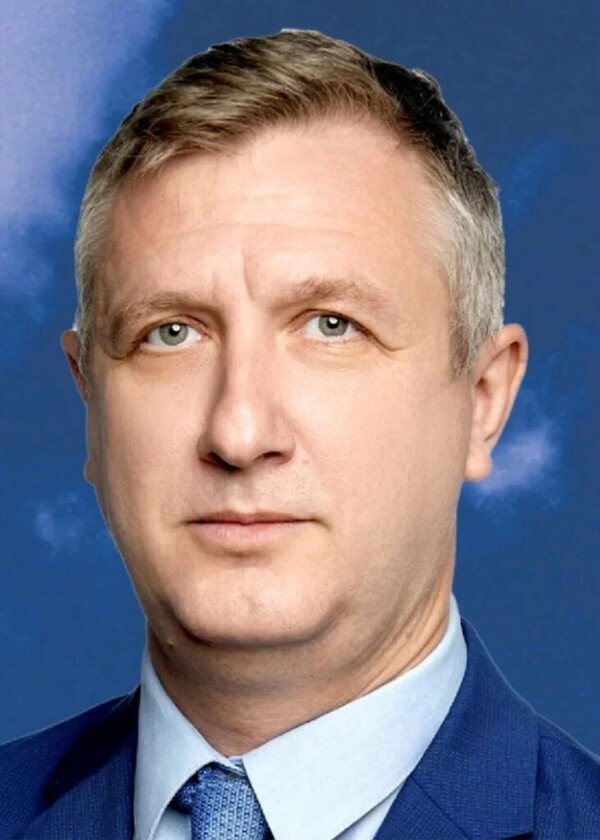
Adrian Sandu: Romania and the automotive sector are still interesting for potential investors. There are open discussions in this regard and whether they will be successful or not depends on several criteria, namely the level of competitiveness that Romania can provide, support received from the authorities and the interest of the customers and their desire to be as close as possible to the areas of destination of the components. Investors need fiscal and legislative predictability above all. In regard to transport infrastructure, they need the same thing, any agreement signed by the government in regards to an infrastructure project to be fulfilled. The Craiova-Pitești expressway or the Pitești-Sibiu motorway are examples of projects where the promised deadlines were not met, and it becomes difficult for private companies to make long-term plans and further investments.
Adrian Sandu, General Secretary ACAROM “Romania and the automotive sector are still interesting for potential investors. There are open discussions in this regard and whether they will be successful or not depends on several criteria, namely the level of competitiveness that Romania can provide support received from the authorities.”
Automotive Tomorrow: What are the main directions that ACAROM focuses on for 2023 and further in regards to the development of automotive industry in Romania?
Adrian Sandu: Within ACAROM we have several development directions we remain true to and we consider to be crucial for the future of the industry. We focus on supporting companies in attracting and forming new talents, including through projects such as Fabrica 4.0, launched in 2022, which aims to provide consulting services to 35 SMEs and train a minimum of 300 people in nine training directions, ranging from cyber security to sales, digital environment, quality management, energy management, CNC programming and production machinery. This is a project where we are targeting companies in the manufacturing sector, not just automotive. Furthermore, as an association, we focus on regulating the market for new and used vehicles, and we lobby for the introduction of a taxation system for the import of used vehicles and supporting the sale of new vehicles through the Rabla and Rabla Plus programs. Developing local supplier integration is an extremely important direction because if the crises of recent years have taught us anything, it is that the farther a supplier is located, the more problems arise in the supply chain. We want to attract suppliers for Dacia and Ford in Romania mainly, but also for the large component assemblers that have factories in Romania, Continental, Bosch, DRÄXLMAIER and others. Decarbonizing the production of vehicles and car components is a must imposed by European regulations and we support companies in reducing energy consumption and carbon footprint. We remain committed to the development of transport infrastructure. We want to develop transport infrastructure, not just by road, but by rail, sea and river. Romania must upgrade its infrastructure to increase transport speed, smooth export-import flows, and attract new investments.