
Adjusting to a new economic reality while also reducing the complexity of the supply chain, searching for flexibility and agility on the supplier side, and at the same time responding to new objectives regarding decarbonization, digitalization and health and safety… this one phrase sums up the mission of Exiros, the end-to end procurement solutions provider, part of the Techint Group, that manages the procurement operations for tubes&pipes global manufacturer Tenaris.
Fully owned by Tenaris and Ternium, the steel business companies of the Techint Group, one of the largest industrial players in the world, Exiros provides procurement solutions for materials and services for both Tenaris and Ternium, but also for Tecpetrol, a company in the oil&gas exploration and production segment, and Techint Engineering and Construction, consolidating, according to company data, as much as 9 billion dollars in purchases in 14 countries worldwide. In Europe, the company coordinates purchases worth tens of millions of dollars each year just for the logistics and transport services and has two teams located in Europe, in Romania and Italy, where Tenaris has manufacturing sites.
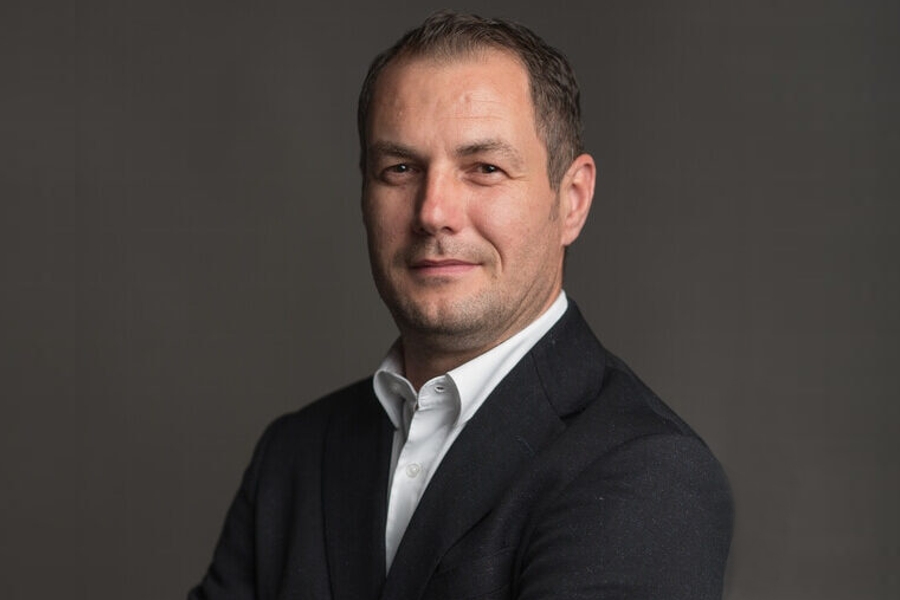
Since July 2020, Gabriel Oncescu has been named Manager for Exiros in Romania. He is also responsible, together with the teams he manages, for coordinating the procurement activity for logistics and transport services in Europe for Tenaris. His experience in sales and with Tenaris, where for the last 8 years he held various roles within the commercial area, from Commercial Director for Mechanical Structural&Gas Cilinders to Senior Sales Manager Europe for Automotive & Hydraulic Cylinders, offered him a unique perspective when it came to managing the Exiros activities. In an interview for Automotive Tomorrow, Gabriel Oncescu shared with us some insights on how he perceives logistics, what it mean to make the transition from sales to the operational side of the business, what are the challenges ahead for the company, partnering with transport suppliers, and the role of Exiros in helping Tenaris achieve its decarbonization objectives.
Automotive Tomorrow: How would you describe your first year as a Manager for Exiros?
Gabriel Oncescu: The first year as Manager for Exiros was and still is very interesting. Despite the challenges represented by the pandemics, the pressure from the customers to deliver quickly and efficiently and the economic whirlwind, this has been a good year, I would say.
Working in Exiros, I understood that my perspective on transport was, in some way, distorted from reality. My background is in Sales. I know the customer’s needs, and I am very familiar with this and looking at things from this side, where the transaction is complete when the invoice is paid. But, without logistics, the sale loop does not close. Where there is no delivery, there is no sale and, thus, no scope.
Logistics is an art form of sorts, I think. You need a deep understanding of the field and to get familiar with the logistics processes to understand them; only then can you find efficiencies. If you lack the overview, the vision, and the framework in which to plan, monitor and then optimize, you won’t be successful in your endeavours to have a more streamlined, efficient and transparent supply chain.
Automotive Tomorrow: What was the objective for Exiros when you first joined the company, and what is the objective now?
Gabriel Oncescu: In 2020, like the entire world, we were confronted with an initial state of confusion, and then we started to understand and react because we could be proactive to a minimal extent.
In 2020, in Exiros we worked on two fronts: the supply of specific COVID materials – masks, disinfectants and, in the context of the significant decrease in Tenaris sales at the beginning of the pandemic, the renegotiation of contracts with suppliers. For the supply of materials, we worked very well with our colleagues in China, and we managed to provide the materials needed to ensure the health and safety of our colleagues and support the hospitals in our communities. The fact that we are part of a global network was a great advantage during this time. Regarding the supplier relationship, we approached them and asked for cost reductions to support our competitiveness in facing the double crisis of the Covid-19 pandemic and oil and gas prices. Today we are seeking the best quality-price ratio, and, more than ever, what counts the most is flexibility and agility.
Tenaris works mainly in the oil & gas industry but also in the automotive industry, and looking at what happened last year, the company needs its suppliers to be flexible, which means being able to stop production when Tenaris stops, but at the same time can restart when the market demands it, to adapt to a new requirement in a short time. The dynamics in the oil&gas market, the fluctuation of the oil price is nothing new for Tenaris, and some of the suppliers have been prepared for this. The financial crisis of 2008-2009 taught everyone important lessons. Among the measures implemented by Exiros, which proved to be beneficial for the business, was working with consignment stock at the suppliers, identifying new ways of ensuring the flow of materials, and inventory reduction. We managed to find suppliers closer to home, in Europe and even in Romania, enabling us to reduce the working capital and, at the same time, to have a better reaction time across the supply chain. At the moment, we are facing big challenges regarding raw material supply, which in the case of Tenaris is scrap metal, and the purchase of which is also handled by Exiros, but we are prepared for the future.
Automotive Tomorrow: What was the most significant operational and logistical challenge this past year and a half?
Gabriel Oncescu: Brexit was and remains one of the operational challenges of this year, even though we are not shipping large volumes to the UK.
Concerning the logistics, rail transport in Romania has been and remains a pain point for us. Due to the current state of the railway infrastructure, we, together with many other companies, record high additional costs. We aim to transport as much as possible by rail, given that this is a means of transportation that offers flexibility, has a low impact on the environment and allows us to transport larger freight volumes. Unfortunately, this is not always possible. We also export steel bars, and the transport from Călărași to Constanța is also done by rail.
Given the speed and tonnage restrictions on specific sections, we have to pay several additional charges for additional wagons, and extra manoeuvres, and the financial impact is very high for us. And the electricity price going up has been one more obstacle to tackle.
Concerning external markets, we have several partners with whom we have implemented intermodal transport projects, and the evolution is quite good. From Romania, intermodal transport is quite limited in destinations, the most substantial traffic being towards Germany, automotive industry fueling freight flows on this relation. There are a few intermodal routes also to Belgium, France, and Spain, but to Italy, they are not as well consolidated, which is a disadvantage for us, as Tenaris has a factory in Italy, in the Bergamo area.
Automotive Tomorrow: How did the relationship with transport partners evolve?
Gabriel Oncescu: One valuable lesson was that it is important to develop connections and partnerships. So, in Exiros we changed the approach towards transport partners in the sense that we are not looking for the lowest spot rates, but, for the medium and long term, we are making a step towards creating long-lasting partnerships, to have stable and competitive services for our customers.
Automotive Tomorrow: Tenaris has announced a medium-term plan to reduce the CO2 emissions intensity per ton of steel by 30% by the year 2030. What is the role of Exiros in helping Tenaris accomplish this goal?
Gabriel Oncescu: One main challenge for Exiros to support this plan is related to Raw Materials supply, including recycled materials usage maximization and materials mix optimization. Nevertheless, we are also focusing on decarbonising logistics and transport activities. When we speak about decarbonizing the transport segment, intermodal transport is a key element, and we are increasingly moving to 100% intermodal whenever possible.
Together with the team and consulting partners in this sector, we set out to map the origins and destinations of transport to identify what we have today and what we could have tomorrow as a means of transport – intermodal, rail, road, so that the user can choose the means of transport according to the parameters of its order. This remapping should bring an economic benefit for the company and one related to decarbonization.
I believe intermodal transport is the future, and we will continue the projects with other partners. Tenaris is looking to reduce direct CO2 emissions and also indirect emissions from its suppliers.
As such, in Exiros we are going further and analyzing the vehicle fleet we have and see where we can use hybrid vehicles, where we can use electric vehicles, for example, inside the factory, and we are also analyzing the fleets of our transport suppliers. We have transport partners that have included in their fleet LNG trucks and are transitioning to alternative powertrains, light trailers, or even partners in the railway segment that use hydrogen engines.
Automotive Tomorrow: Supply chains are becoming more and more digital. What role does digitalization play on Exiros development agenda?
Gabriel Oncescu: Digitalization is very high on our agenda and covers a wide range of processes. One key project that we are currently working on is the digitalization of the transport process, aiming to automate as much as possible to the point where when the finished product is ready for shipment, the order is sent to the carrier so as to reach zero stock and the transport supplier is connected with real-time lead. This is essential for us. Also, as the health and safety of our colleagues, employees, and collaborators are our first priority, we have developed some digital instruments to increase safety inside the factories. The Web Portal is one example in this area. This is a web interface where providers register with their assigned employees for access to the Tenaris premises in Romania. If the data is not updated in the system, they will not have access to the factory premises. This is a tool that helps us to screen our contractors to avoid incidents or situations of expired authorizations, for example. Booking Online is another tool we have developed that allows customers to schedule their transport to choose their slot for loading and unloading at the destination. This helps us optimize waiting times at the gate and factory stay times and leads to more time for the driver to rest or to drive, with a significant impact on safety as well.