
The BMW Group has implemented several projects in its packaging logistics to further save resources. With these projects, the Group aims to work closely with suppliers to reduce carbon emissions and realize the principles of the circular economy as best it can.
As part of this initiative, the European plants will use more recycled material in their packaging. In 2022, the proportion of recycled material in reusable packaging for logistics purposes almost doubled from around 20 percent to over 35 percent. However, using alternative sustainable materials, reducing singleuse packaging, introducing lightweight packaging in certain areas and reducing transport volumes will also help cut carbon emissions. The BMW Group is monitoring the impact of individual measures via a CO2 calculator for packaging. The Group’s overall aim is to reduce CO2 emissions in the supply chain by 20 percent per vehicle (compared to 2019).
Plastic in packaging replaced by recycled material
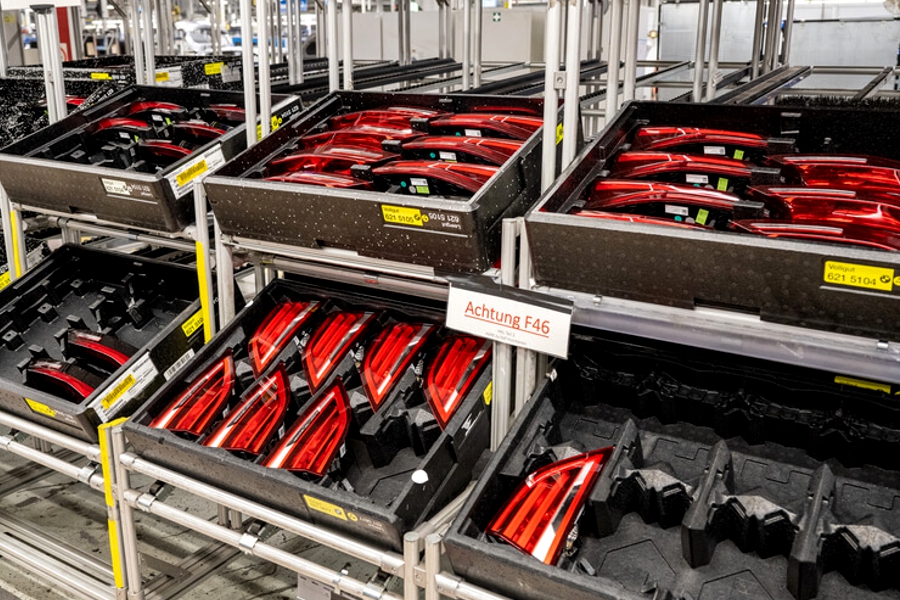
One example of how the BMW Group is fulfilling the criteria of a circular economy is the use of recycled material in EPP packaging (EPP = expanded polypropylene). Currently, our newly developed EPP packaging already contains 25 percent recycled material. EPP is used in special containers as its shape can be adapted to the components being packaged, allowing them to be transported safely. Around 360,000 of these containers are needed each year. Using 25% recycled material allows us to save almost 280 tons of CO2 annually. There are plans to increase this proportion of recycled material even further, with the first pilot schemes with 100 percent recycled material currently underway. If these tests are successful, this configuration will become standard for new contracts from 2024. An additional 680 tons of carbon emissions savings can be made every year by using covers and so-called small load carriers with 50% recycled contents.
Reducing transport volumes
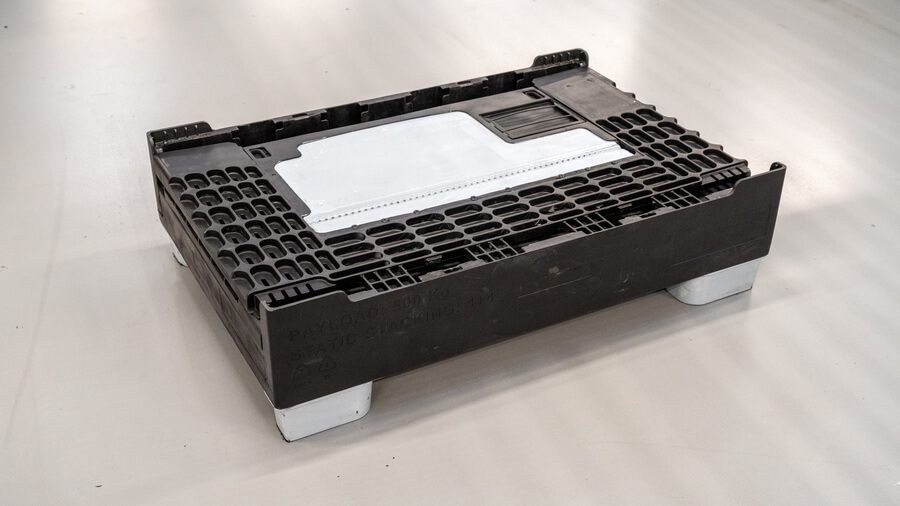
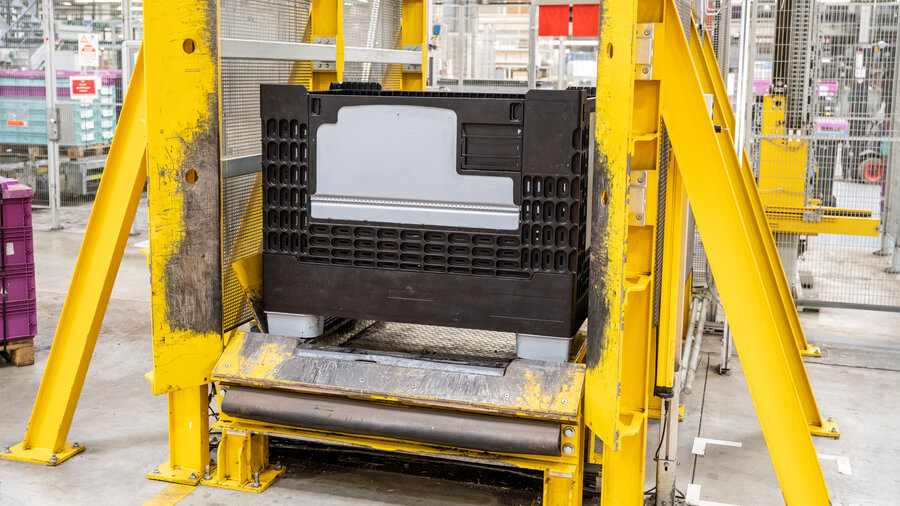
The BMW Group is introducing something that will have an even greater impact on emissions: folding large load carriers. As of 2022, instead of pallet cages made of steel, the OEM is using folding plastic alternatives made from over 90 percent recycled material. These work in a similar way to the collapsible shopping crates that most people are familiar with: when they are empty, they can be folded up, making them easier to transport. Using 15,000 of these new containers reduces CO2 by around 3,000 tons per year.
Alternative materials with great potential for the future
When it comes to packaging, the sky’s the limit. The company is launching pilot projects using bio-based materials to replace oilbased substances polyethylene and polypropylene (PE and PP). BMW is also investigating whether and in what ways we can use materials from recycled household appliances in its packaging. In the long term, the company’s aim is to use alternatives to raw materials across the board.