
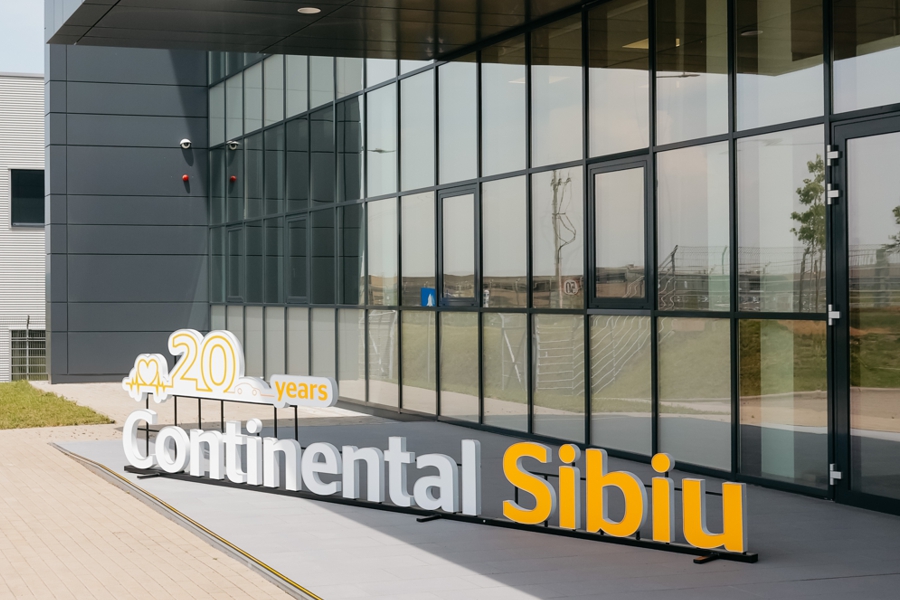
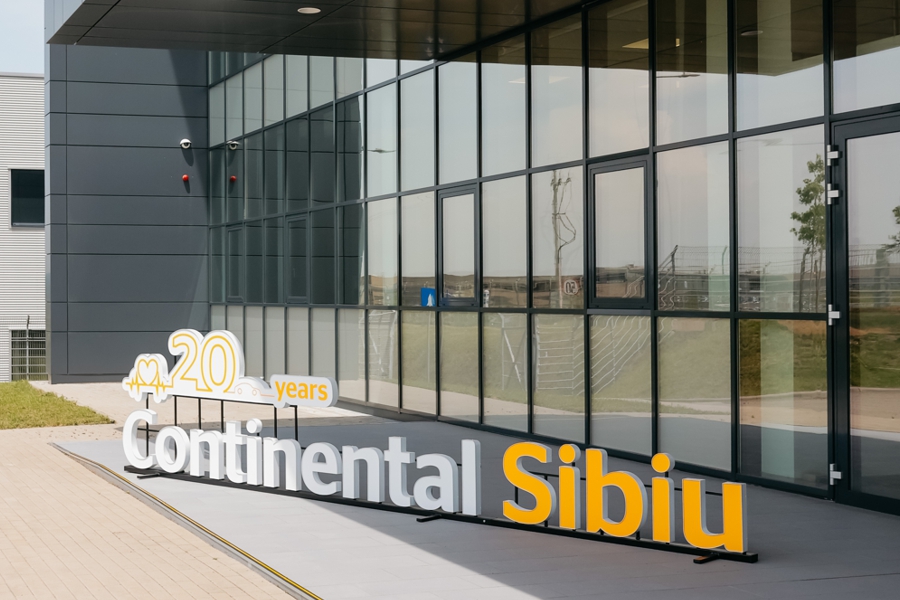
Technology company Continental is going on the offensive in respect to its approach to sustainability. The company strives for 100% carbon neutrality along the entire value chain, 100% emission-free mobility and industry – in terms of harmful emissions, 100% closed resource and product cycles driven by circular economy, and 100% responsible sourcing and business partnerships.
With Continental Sibiu being an important part of Continental manufacturing and R&D global footprint, we talked to Florian Andrei, Head of Facilities Management at Continental Sibiu about the sustainability strategy, steps taken into attaining the goals that the company set for itself and how the company is promoting sustainable mobility.
For the past 6 years, Florian has been Head of Facility Management & ESH for Continental Sibiu, a location covering more than 220.000 sqm, with 3 R&D buildings and 6 production modules, production module 7 currently under construction.
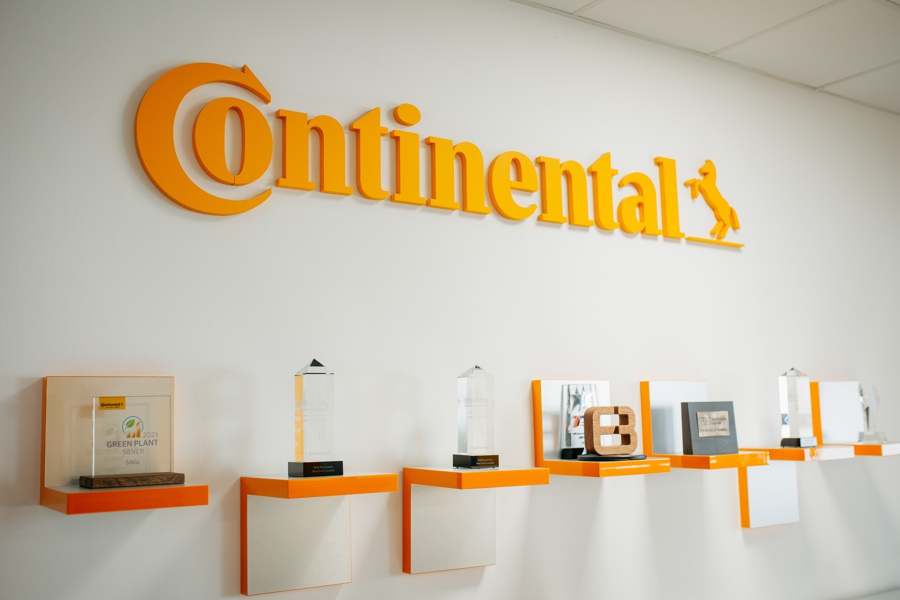
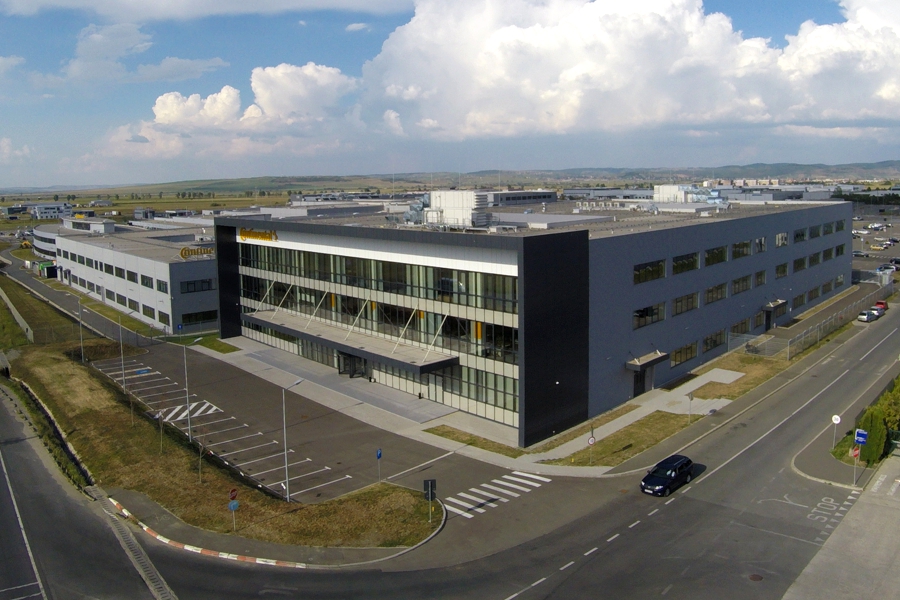
Under his management, Continental Sibiu has become a benchmark location for carbon neutrality, sustainability, and energy efficiency among the Continental plants, having been awarded the Green Plant Silver Label in 2023.
Furthermore, Continental Sibiu aims to obtain the LEED Gold certification for sustainable buildings for its 7th module, currently under construction.
Automotive Tomorrow: How does Continental Sibiu align its ESG strategy with Continental Group’s global sustainability goals?
Florian Andrei: Continental works as a technology company for safe, intelligent, and sustainable mobility and material solutions that contribute to clean air and accident-free, comfortable driving. In our which we want to achieve by 2050 at the latest, together with our partners along the value chain.Sustainability is also a key component in our vision of Creating Value for a Better Tomorrow. Continental Sibiu fully aligns with Continental Group’s Sustainability Ambition 2030 and 2050 and from a facility management point of view key initiatives are: the plant targets net-zero emissions by 2040, aligning with Continental’s 2050 carbon neutrality goal, energy efficiency projects include photovoltaics, HVAC upgrades, heat recovery, insulation, lighting, and smart monitoring, waste recycling to exceed 98%, with plastic-free policies in place. Also, the R&D center developed five products certified with the Recycle Passport, supporting circular economy efforts.
Automotive Tomorrow: Are there any flagship projects or innovations from your area you’d like to highlight that contribute to sustainability goals?
Florian Andrei: Yes, we have several serious projects in Continental Sibiu for which we consider to be of reference from sustainability projects point of view. We installed a 1,000 kWh ground photovoltaic system and we have plans to add another 400 kWh in 2025 to boost renewable energy production. Through our Carbon Neutrality Roadmap, we developed a masterplan that has reduced emissions by over 21% in the past two years, moving closer to its goal of achieving net-zero by 2040. In the area of smart technologies, the company secured EU grants to develop a new utility monitoring system.
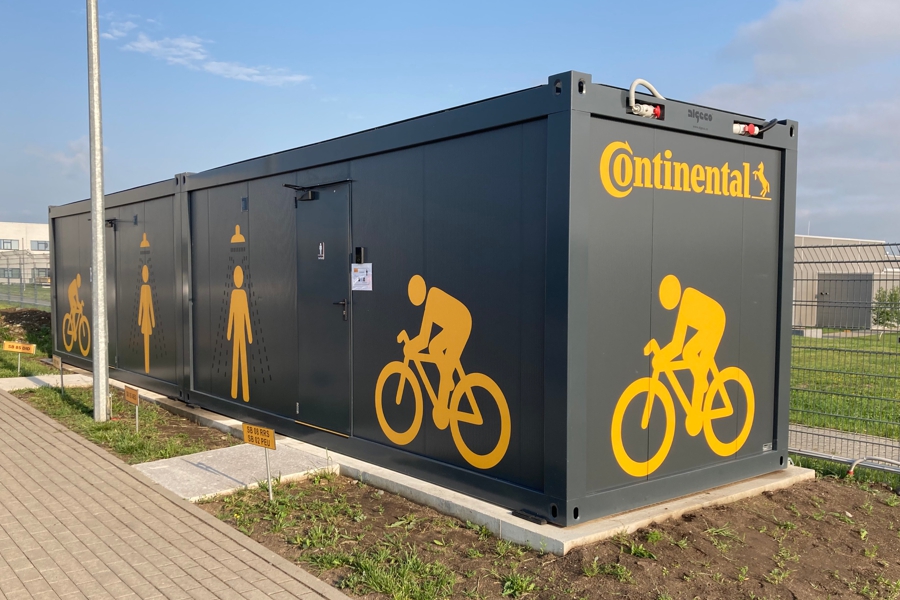
To promote sustainable mobility, within Continental Sibiu we have implemented a bike-sharing system, car-sharing services, and free EV charging stations for employees’ electric scooters and cars. Additionally, the first phase of a reforestation project was launched, with employees planting over 3,500 trees, reinforcing the company’s commitment to sustainability.
Automotive Tomorrow:What are some key specific challenges in your industry when it comes to sustainability and green transition?
Florian Andrei: All our focus areas are associated with major challenges for the company, but also with great opportunities. We are convinced that acting sustainably will increase our capacity for innovation and our future viability by opening our company to change and helping identify risks and opportunities at an early stage. In concrete terms, for example, even though Scope 1 and 2 emissions are easier to control, the volatility of the energy market in terms of price, does not help us create a medium and long-term business plan, which affects the return on investment of efficiency projects.
Also, a major challenge will be reducing suppliers’ emissions and customer vehicle emissions, considering that important states desire to exit current climate agreement.
Automotive Tomorrow: What changes are being made to ensure sustainability throughout the entire value chain, from raw material sourcing to end-of-life product management?
Florian Andrei: The automotive industry is highly regulated in terms of quality requirements. The changes need to be implemented from the initial step of designing the product, and, how I’ve mentioned before, we have been successful in obtaining recycling passports for 5 products so far.
Each stream involved has clear processes that need to be managed and with the help of our integrated reporting systems the data collection is done automatically. From the KPI perspective we are monitoring over 20 KPIs, of which the most relevant are CO2 emissions, waste for recovery quota and good working conditions.
Automotive Tomorrow: How is digitalization helping you measure, track, and improve sustainability performance?
Florian Andrei: We have a series of digitalization initiatives which help us be more performant in achieving our goals. Utility Monitoring System is helping us to observe all energy deviations & to identify opportunities for improvement. Building Management Systems help us to have the functioning of all utility supply equipment automated.
Automotive Tomorrow: How do you balance the trade-offs between sustainability investments and maintaining cost efficiency in a cost-sensitive market?
Florian Andrei: It remains to be seen to what extent and for how long current geopolitical events, the ongoing uncertainty in supply chains and inflation will continue to affect the automotive industry and the macroeconomic situation. However, at Continental sustainability is anchored in the foundation of our values and on our journey, we count on reliable partners and cooperation at eye level in our industries to allow all links in the value chain to truly join forces.
If we succeed in jointly describing an ambitious but realistic path, then transformation becomes a real opportunity.
Our focus from this point of view is improving our carbon footprint, which is directly linked with improving energy consumption. In this case, we are proactively trying to identify those ideas which are feasible form a financial stance.
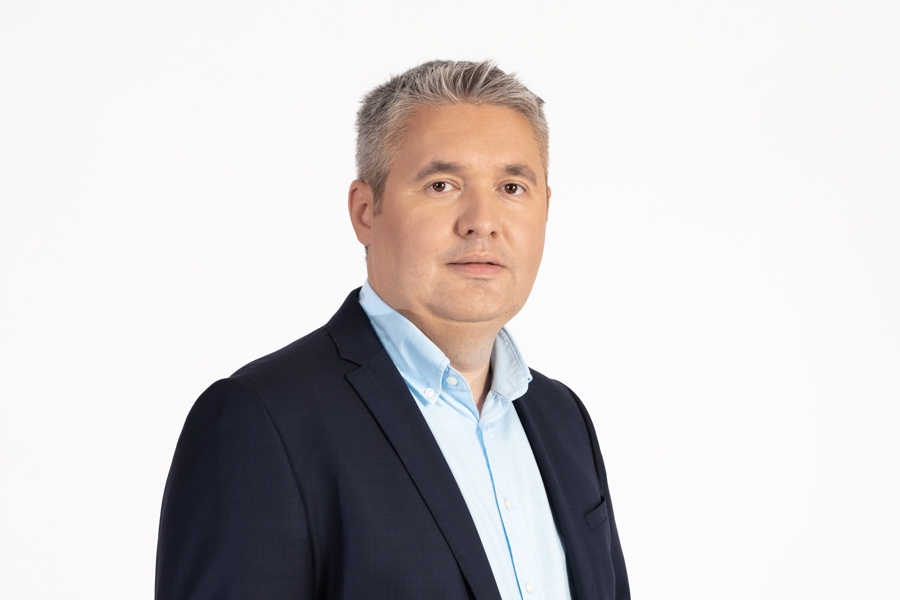
Florian Andrei, Head of Facilities Management Continental Sibiu
At Continental sustainability is anchored in the foundation of our values and on our journey, we count on reliable partners and cooperation at eye level in our industries to allow all links in the value chain to truly join forces.
Continental Sibiu is today one of the top employers in Romania and an important partner for the business and education environment. From 2004 until now, Sibiu location has grown to become an important R&D Center in the global network and has reached 6 production modules (the 7th module is currently under construction). Continental Sibiu’s plant capacity is of over 40 million electronic units produced per year. The size of Continental Sibiu today exceeds 30 football fields.