
Rezolv Energy launched almost two years ago to accelerate the energy transition in Southeastern Europe. The company already has well over 2GW being prepared for construction.
This includes two very large solar PV projects: St. George, which will become one of Bulgaria’s largest solar plants, and Dama Solar in western Romania, which will be the largest solar project anywhere in Europe once it is operational.
Rezolv also has more than 1GW of wind power under construction in Romania through two projects it is developing in partnership with Low Carbon.The power from these projects will be sold direct to companies through long-term Power Purchase Agreements (PPAs).
In an interview for Automotive Tomorrow, Marian Pavel,Rezolv’sGeneral Manager for Romania, explains why the automotive industry is driving much of the interest in renewable energy PPAs in Southeastern Europe.
Automotive Tomorrow: How progressive has the automotive industry been when it comes to buying renewable energy through PPAs?
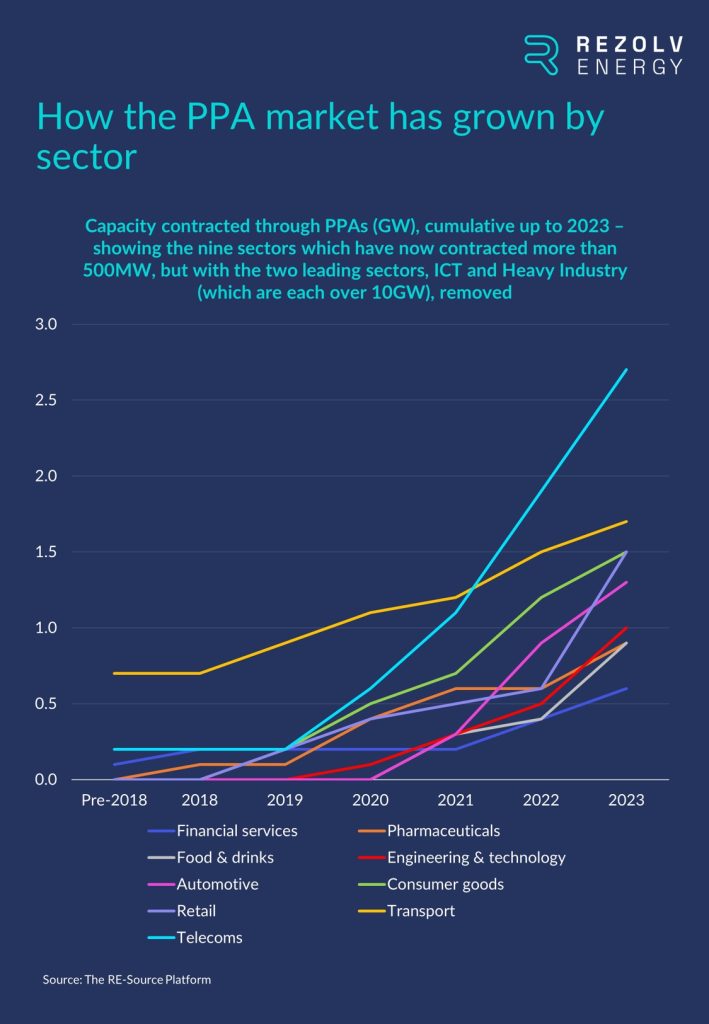
Marian Pavel: Automotive companies across Europe have so far signed PPAs covering 1.3 GW of renewable power. To put that into context, automotivesits seventh on the industry sector list, behind ICT (11.6 GW), Heavy Industry (10.0 GW), Telecoms (2.7 GW), Transport (1.7 GW), Retail (1.5 GW) and Consumer Goods (1.5 GW).
However, the PPA market in the automotive industry only really got going in 2020, and it is now one of the fastest-growing sectors for renewable energy procurement.
Automotive Tomorrow: Which automotive companies are leading the way?
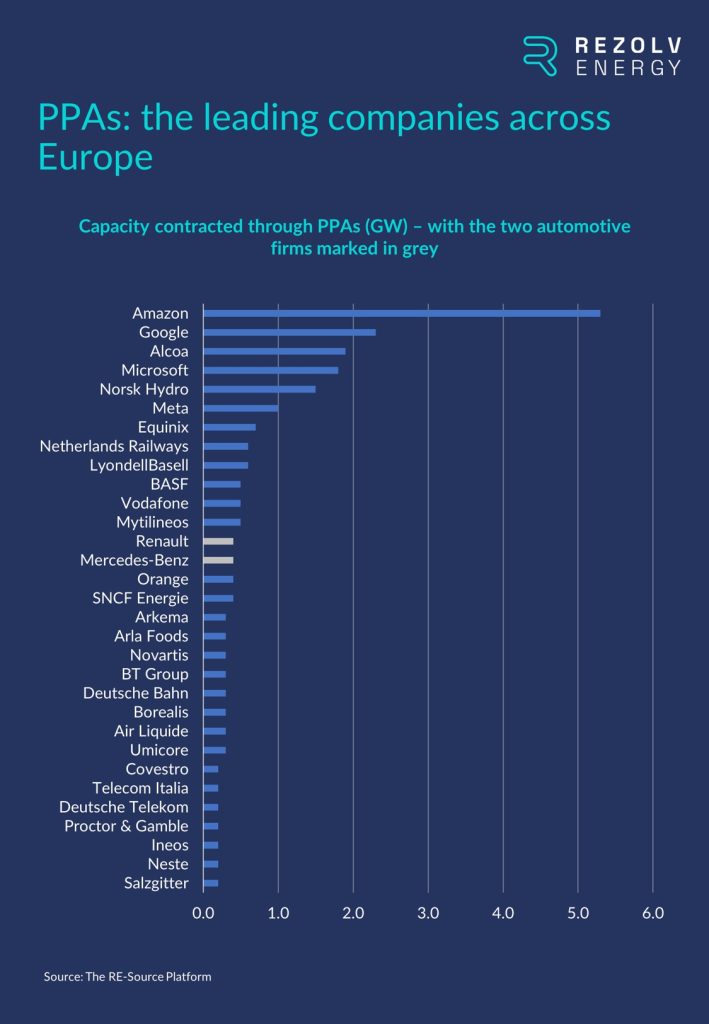
Marian Pavel: At European level, Renault and Mercedes-Benz are the only two automotive firms in the group of 30 companies which have contracted the cleanest power capacity through PPAs.
In Renault’s case, they have signed some big PPAs, though, including the largest one ever signed in France and another covering 100% of the company’s electricity needs in Spain.
Automotive Tomorrow: In your conversations with automotivecompanies in Southeastern Europe, what do theycare about most?
Marian Pavel: There are a range of factors, but the commercials always need to be right. The reality is that a well-structured PPA will, in the long-term, reduce a company’s energy costs compared to traditional utility rates – as well as shielding them from market fluctuations.
The other major objective is to reduce emissions. If you look at the automotive companies that dominate the industry in this region, most of them havecommitted to firm decarbonisation deadlines. For example, Ford and Renault aimto achieve carbon neutrality in Europe by 2035 and 2040 respectively, andStellantis plans to achieve carbon net zero by 2038.
These are stretching targets compared to other sectors, and renewable energy procurement will need to play a central role if they are to be achieved. Given the deadlines, these are also not decisions which can be delayed much longer.
Automotive Tomorrow: Are there any other factors?
Marian Pavel: Some companies are also motivated by the reputational benefits because, unlike other forms of energy contract, PPAs support the financing of renewables projects. By signing a PPA, companies are therefore helping build the projects that will supply them with clean power. If they want to, they can put their name on it.
This is particularly attractive if the company knows that the project will be built and operated to the highest ESG standards – that the developer is fully committed to protecting nature and to leaving a lasting, positive legacy in the local communities.
This is one of many reasons why Rezolv has developed such a robust sustainability strategy and intends to set the standard for the responsible development of renewable energy projects in this region.
Automotive Tomorrow: Do your customers need to be based in Romania or Bulgaria to sign a PPA with Rezolv?
Marian Pavel: No. There are two types of PPA: physical PPAs and virtual PPAs. With a physical PPA, the buyer must be based in the same country, or in a neighbouring country with connected grids. Virtual PPAs can be local or cross-border, so the energy from Rezolv’s current portfolio of projects can be sold to off-takers based outside Romania and Bulgaria.
Automotive Tomorrow: What would you say to an automotive company in SEE that is considering switching to clean power?
Marian Pavel: Get in touch! Rezolv has a team of experts who are here to help companies understand the range of options available and to guide them through the process from start to finish.