
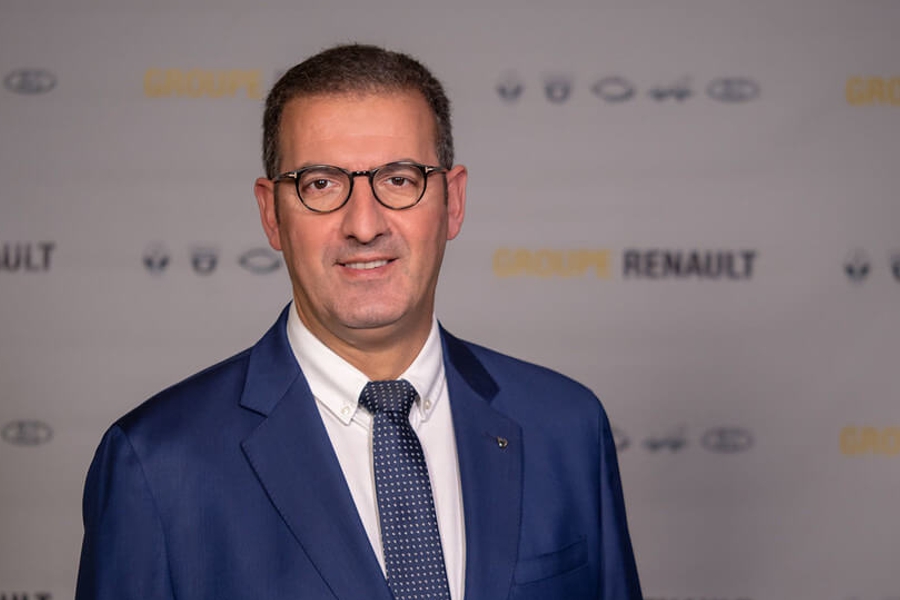
Christophe Dridi, CEO of Automobile Dacia and Managing Director Groupe Renault Romania, started his professional journey as an engineer for quality and validation in France, after graduating from Ecole Superieure des Sciences and Technologies de l’Ingenieur in Nancy, France.
He then had different assignments and roles in Renault factories from Japan to Mexico, Normandie, Marocco where he was the manufacturing director for both Casablanca and Tanger factories, and for the last three years, Romania.
After two years as the executive director of the Dacia Vehicle Plant in Mioveni, at the beginning of 2019, Christophe Dridi became the General Manager of Automobile Dacia.
Christophe Dridi has a very “hands on” approach in running the business, inspired and shaped by the learning experiences in different parts of the world and the years spent among different cultures, which helped gain insights into the different perspectives of the automotive business. “Life is always beautiful in PowerPoint, but you need to see the reality” he says, and for this reason he is present on the shop floor at Mioveni plant and the Titu Research Center every week, he visits suppliers, partners and potential partners all over Romania as believes that Dacia and the automotive industry in Romania can become stronger with the help of local suppliers. At the same time, as quality and competitiveness are two mandatory criteria, suppliers also need help in order to meet these standards.
For this edition of Automotive Tomorrow we interviewed Christophe Dridi about the business strategy for Dacia, his desire to better integrate local suppliers in the value chain and why is this important for the whole industry, not just Dacia.
Automotive Tomorrow: What is the role of logistics in Dacia? Is it a cost center or a strategic asset?
Christophe Dridi: I prefer the term supply chain, because when you think logistics you only think moving a product from A to B, but that is just transport. In fact I think supply chain is the brain of the entire industrial system. I often compare it to the human body, which is not just a leg, a hand, an organ, it is a system controlled by the brain that is telling the hand to move, when and in which direction. In the same way, we need to abandon the old way of thinking and seeing a company through hierarchy and separate functions: commercial, financial, human resources, logistics, production and we have to think like a system and be able to understand that we need to work together, that each one has his role, and that supply chain has to be the brain. When you see it like this you can also have a different approach when it comes to optimization and you can focus on the entire flows for the industrial platform and suppliers. You can choose to optimize one in three things: the working stations, the surface or the flow and a mistake made worldwide is, I think, the optimization of the work stations. It has been demonstrated that in order to have better competitiveness you have to optimize the flows, at platform level, but also at supplier level. In terms of suppliers, it has been proven that the best way to make production efficient is through synchronization, what the Japanese call doki seisan. For example, now we have 15 suppliers around the factory of Mioveni that manufacture in synchronization. And it’s precisely logistics that decides, with the help of commercial and production and other functions involved, of course, what model is produced and when and this goes into our system, the supplier’s system and everybody knows what to do. This is why I say supply chain is the brain.
Automotive Tomorrow: In terms of suppliers, what projects is Dacia working on for a better integration of local suppliers in its value chain?
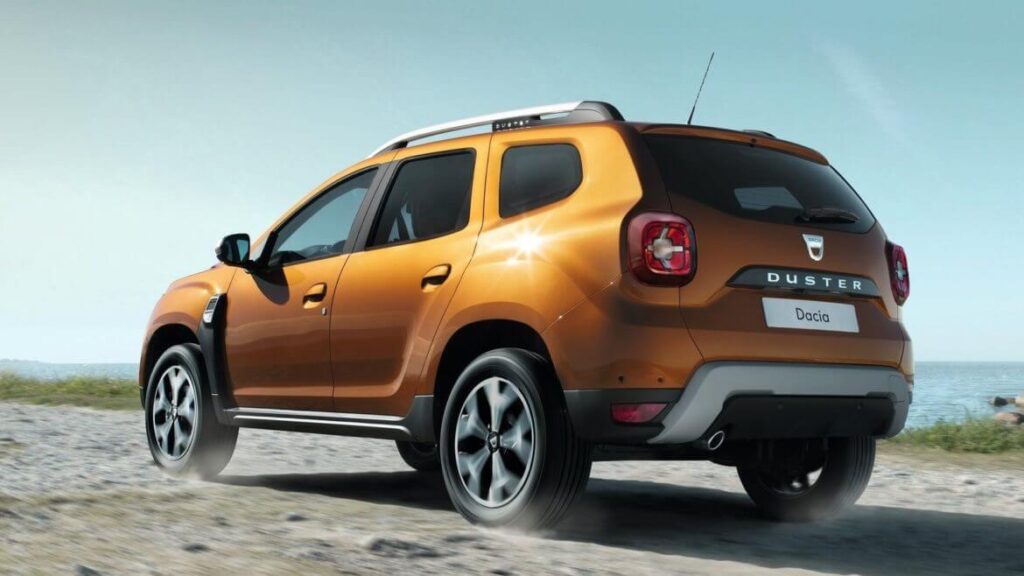
Christophe Dridi: It is very important for Romania to develop the local integration. The automotive industry is very important for the economy of Romania – 26% of exports and 14% of PIB come from this sector. Like I always say it is a “jewel” for the economy, so we have to maintain it and even more, to develop it. But in order for the industry to grow you have to have more volumes and to have strong local suppliers to help achieve that.
I prefer the term partner instead of supplier, because they are our partners, they are helping us improve the cars we produce and I am very happy to see their willingness and determination. But there are also a number of suppliers in Romania we do not work with because they do not meet the quality standards. In Groupe Renault Dacia in Romania we have 18.000 people and we have experts, quality engineers, technicians and we need to help those suppliers to meet the quality standards. I have asked for two things. The first was to find all the suppliers within a range of 100 kilometers from Mioveni and to check what the opportunities are. Why 100 kilometers? Because we need to be able to do synchronization. The second thing is that we need a helicopter view of the automotive industry in Romania. For example, 50% of all Duster models have aluminum wheels, our customer demand it. And these aluminum wheels are imported from China, but now we are working with Alro Slatina to produce them also here, in Romania. Another example is the metal sheets for the cars. In Romania, we have Liberty Steel in Galați who is manufacturing steel and metal sheets, but in January when I asked where do the metal sheets come from, only 1% where sourced from Liberty Steel, the rest were coming from Turkey, other countries in Europe, even Korea. Now we are at 6% of all metal sheets being sourced from Galați. The rear lights in the Duster model, our pride and joy, are manufactured by Elba in Timișoara, but the head lights where, until now, imported from Russia. We went to Timișoara, had discussions with Valeo and I am very happy to say that starting with Duster 2, the head lights are made in Romania also. We have to develop the local integration because by doing this we will be more competitive, more robust. Can you imagine what a high local integration means for the logistics, for reactivity, for the stocks, from the environmental point of view?
Automotive Tomorrow: How do you drive innovation into the supply chain? Do you look outside the company for innovation and where do you look?
Christophe Dridi: There are two kind of innovations. Often times when people hear innovation, they think of a something that is not existing and you have to create. Most of the time there is no need for creating something new, the best thing to do is benchmark. And of course, you can do benchmark with the competitors, within the industry and the Japanese manufacturers have been in advance for a long time, especially Toyota. And picking kitting, for example, has been revolutionary for the industry from my point of view because it allows operators to concentrate on the real added value of their work and that is installing well the components – navigation system, air conditioning, inside the car and not being stressed of whether he chose the right reference or not. The more you will focus on the added value of each person working the line and how to put out the non-added value, you will have better safety, quality, performance and competitiveness. And it’s the same in logistics. You have two kind of innovation and two kind of solutions and you have to be very careful which one you choose and why. Sometimes is better to have people closer to one another than to put AGV’s in the factory. When you have the picking close to the operator is better to put a gravity flow than an AGV. We have examples of factories that decided to put AGV’s and ended up needing more people supervising the machines than before installing them. AGV and any kind of automation and technology is good if you think first what is the added value and what is the non-added value that it puts out. We have to be careful at the “fashion effect” and think like a system to be competitive and efficient.
Automotive Tomorrow: In this rapid changing current environment, what are, in your opinion, the main skills and competences for people working in this industry?
Christophe Dridi: The right skill data is agility, adaptability. You need technical skills of course, you need a qualification, to know the basics, but today it is better to have people who are motivated, passionate and agile than people that are very, very high skilled, but who lack the other elements. There is one phrase that I kept in mind since starting engineering school. I remember the director wrote on the board E=MC2 and asked us what it was. Of course, we thought of Einstein, but he said in fact it was the efficiency formula for a manager – E=efficiency, M=motivation, C=competence, C=communication. You can be very skilled and have high competence, but if you don’t have the two others, it doesn’t matter. More than 30 years later, this formula is still true and remains the same. What we add today is agility and an open mind. Today you cannot work by yourself, you have to communicate well with other people, be multicultural. For example, people here in Renault Bucharest Connected work with French, Moroccan, Russian, Brazilian, Indian, Argentines, Algerians, or Columbians. The same in AILN in Mioveni, but for this you need to be able to adapt and this is very important to me.
There are four main priorities that we decided in PAR – Parteneriatul Auto Român (The Romanian Auto Partnership) together with Ford, Bosch, Continental and the other members: the local integration of suppliers; measures against used cars in Romania; infrastructure, and not just highways, but also railways and inland waterways transport – Danube and the Port of Constanța and education. Regarding the education I am referring especially to dual education, because the industry needs automation specialists, roboticists, people who are trained for jobs we need, key technical skills that are a priority for us in the industry and we should focus on that.
(This interview was initially published in the publication Automotive Tomorrow in March 2020. Since then, Groupe Renault and Dacia had entered a new phase of development and Mr. Dridi has been named VP DACIA-LADA, INDUSTRY)