
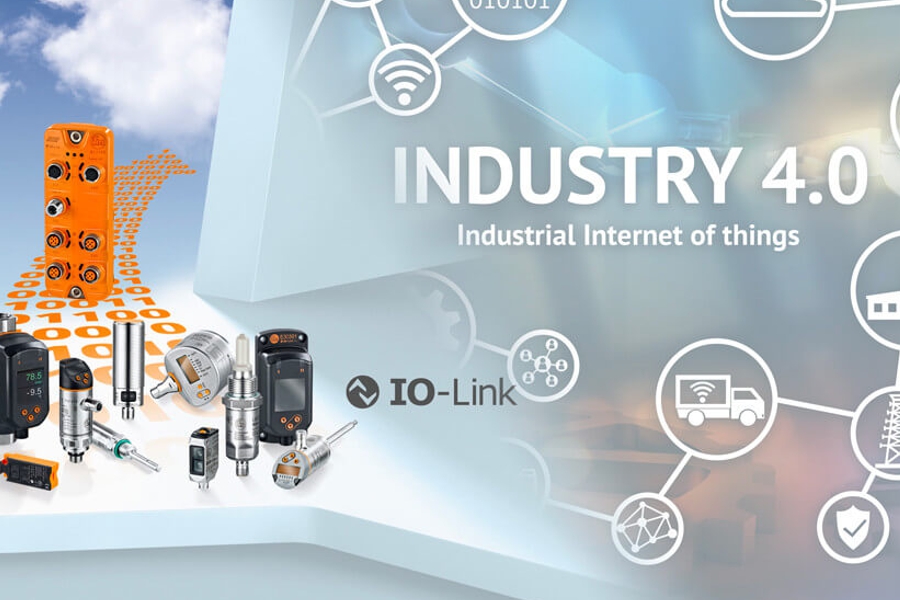
Industry 4.0 is no longer an abstract concept, it’s here and it’s transforming the concept of manufacturing and the way products are being made.
Industry 4.0 is defined by McKinsey as the “digitization of the manufacturing sector, with embedded sensors in virtually all product components and manufacturing equipment, ubiquitous cyber physical systems and analysis of all relevant data.” And as manufacturing processes become increasingly digital, the digital twin is within reach.
Industry 4.0, digital twins, digitalization in manufacturing and other related areas like HR were some of the subjects we approached in an interview with Florin Moloșit, Managing Director of ifm electronic Romania, part of ifm Group, a leading sensor manufacturer and solution provider for Industry 4.0 With more than 7.000 employees in over 85 countries ifm Group, who celebrated its 50th anniversary in 2019, prides itself in being close to its customers and offering the flexibility and individuality of a small enterprise and the quality and professionalism of a group. In Romania, the group has two manufacturing units – ifm efector and ifm prover, both located in Sibiu and plans in the next few years to expand its footprint and production here. The company also has plants and development units in Germany, where more than 70% of its products are manufactured, but also in USA, Singapore and Poland, all part of the strategy of being close to the customers.
“We serve over 150.000 customers and our main competitive advantages is the quality of our products and the fast delivery time. Over 98% of our products in stock can be delivered in 24 hours anywhere in Europe and for the rest of the world, depending on the transport provider. But, for sure, from all our competitors, we are the manufacturer with the fastest delivery time. Another big advantage for us is that we have employees with a great technical know-how and expertise which can provide solutions and act as consultants for our customers. They have a deep knowledge of the industry, of the product portfolio and the automation sector.
Last, but not least, we have sensor solutions in our portfolio for all industries. In Romania, the industrial production is largely automotive and its from where our biggest and most important customers come from – 60 to 70%, but there are countries where food industry for example is where 70-80% of our products are used” says Florin Moloșit.
Automotive Tomorrow: Most of ifm’s clients in Romania are coming from the automotive sector. How do you perceive the automotive industry, not just in Romania, but at regional level? How do you see the changes in the industry and the move from diesel towards electric vehicles?
Florin Moloșit: Yes, it’s true, electric vehicles are the hype of the moment, but I think there are a few things to take into consideration before dismissing diesel altogether. First there is a lack of vision regarding the politics. You cannot stop a technology that is working without having a reliable substitute and the matter of the fact is that the electric car is not ready to take the place of gas or diesel cars. There is no infrastructure for electric cars and we still have a long way to go before this will be a long-term sustainable solution. Then, there is a technological issue, because the automotive production lines are actually very old and the technology is outdated. To manufacture a car is very expensive, because a lot of the processes are based on manual or semi-automated production and there is a clear need for a technological shift on the production line. Also, one other aspect that needs to be taken into consideration is that the mobility concept is changing. The younger generations don’t invest in cars, they use circular economy, ridesharing apps. They have a new way of thinking, of doing things, which will for sure impact the automotive industry. Technology companies own the future. If we look at top 10 biggest companies in the world, they are all software companies – Google, Apple, Amazon, Alibaba, Uber. The car, the automotive industry as we know it is already outdated and this is why there is a lot of incertitude on the market at the moment.
Automotive Tomorrow: You talked about the fact the future belongs to technology companies and I would like to address the subject of Industry 4.0 and the interest that manufacturing companies in Romania show towards this subject.
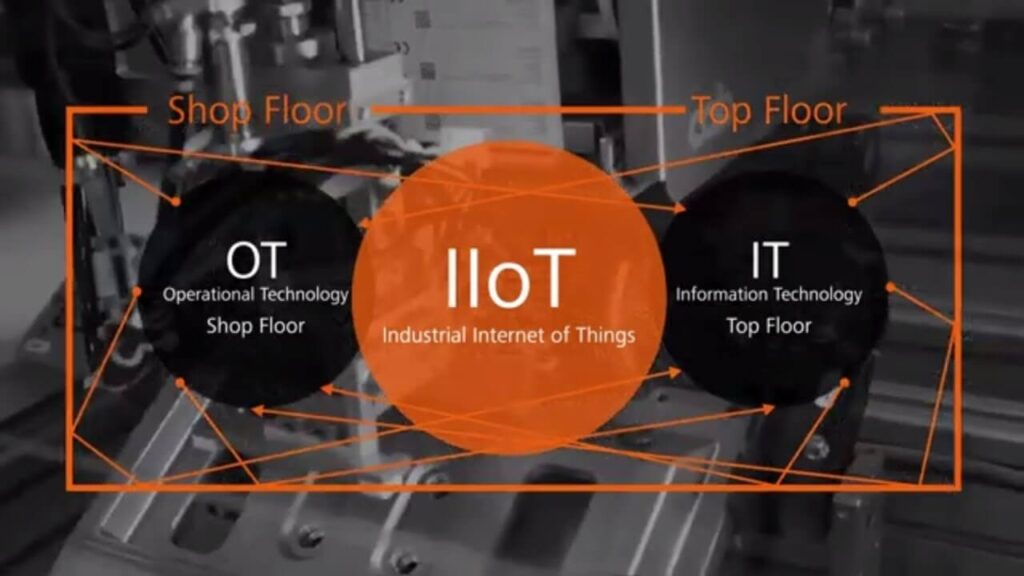
Florin Moloșit: Industry 4.0 means solving issues you were not aware they were there, or you knew existed but didn’t know the extent. For example, solving the loss of compressed air in manufacturing units which is the most expensive utility in production. A few years back, Industry 4.0 was hard to achieve, but now there are a lot of really accessible and affordable solutions on the market. From a technological point of view things have changed and improved. Ever since microprocessors became a component that could be implemented in almost every electronic device, any product that has a minimum of intelligence inside can become a smart device. Any product or equipment can be a source of information for a statistical and diagnosis application and can help managers in the decision-making process. Machines in factories will be the next smart device and will change the game. Indeed, there are some challenges and protecting know-how and proprietary technologies and products is the most important. This is why we see companies that are a little reluctant when it comes to digital twins and cloud, but once they will be convinced that their assets and technologies are safe, every company will have a digital twin, a virtual factory that will allow to put things in perspective, to simulate different changes for products, layouts of the production line and to see the results in order to make the best decision, faster and without added costs. The challenges in the industry nowadays come from developing new products, from optimizing the supply chain, automation, training employees, ensuring safety, using less energy for the manufacturing processes. Now, for example, about 30% of the energy in manufacturing units is lost, which is huge if you think of an energy bill of 2-3 million euro per year. Many manufacturing companies have old equipment on the production line and have very little preventive maintenance. One of the most important features of Industry 4.0 in manufacturing is that it can predict months in advance if a machine or a a certain component will breakdown. This could bring important savings for companies, not to mention that a well-maintained equipment has a life cycle longer with 20-30%. In Romania there are manufacturing units that have started implementing Industry 4.0 on the production line or for equipment maintenance, but we do not have one smart factory, a digitalized factory end-to-end.
Automotive Tomorrow: How can you use digitalization and industry 4.0 for HR, for example?
Florin Moloșit: HR 4.0, as we call it, is possible only through technology. Today recruiting and training is unthinkable without smartphone and digital solutions. 20’s something employees don’t have the patience to learn information from analogical sources and every position in the factory has to be transformed, rewritten and digitalized. And the big advantage in having digital processes is that you can also digitalize the solutions, the problem-solving methods for everyone to access and to see even if the person who found the solution is no longer with the company. Machine validation is a solution we have in our portfolio and has huge success in HR departments, something that at first would seem unlikely, but they are interested because it has a great impact in quality and production. A very complex equipment needs an operator with a specific training and by using this solution, the company can ensure that only trained operators can work on those machines. The employee has all of its qualifications and trainings encrypted on a tag and the machine will not start if the operator doesn’t have the appropriate qualifications. And when you have a company with 3.000-5.000 employees, the solution is very useful and ensures the safety of the people and the integrity of the machines.
(This interview was initially published in the publication Automotive Tomorrow in March 2020)