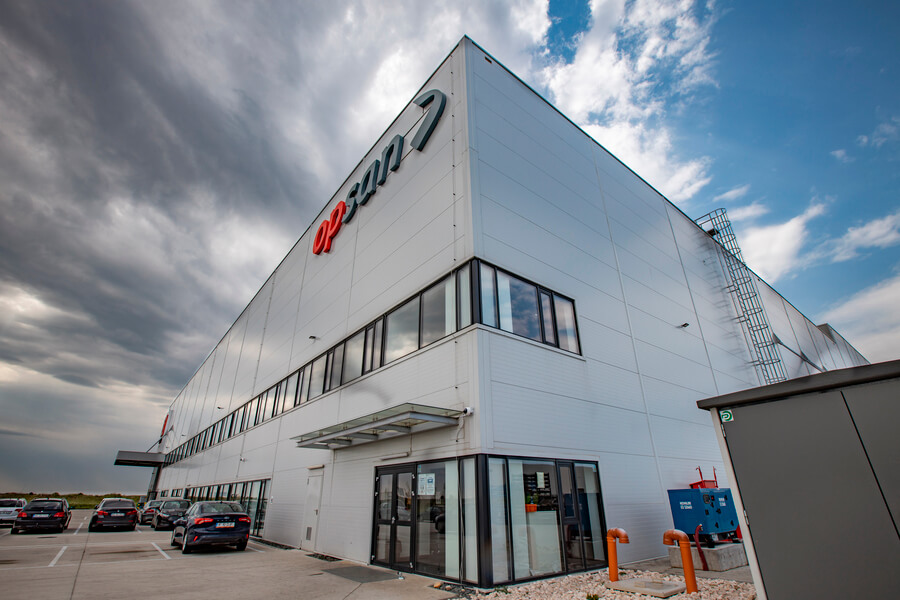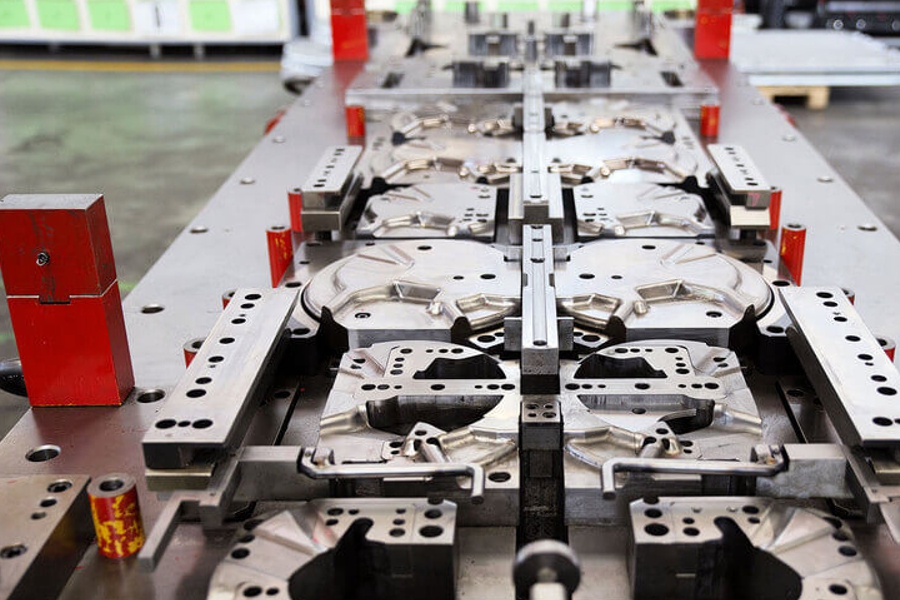
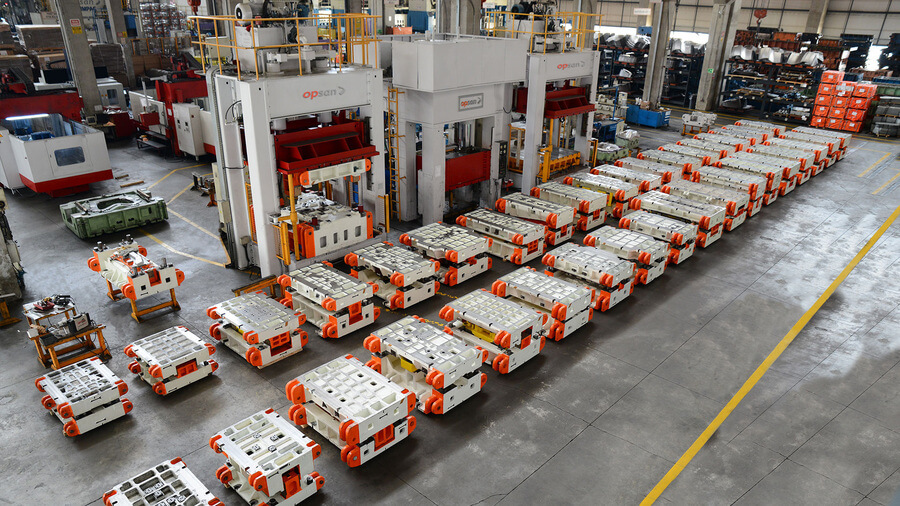
Opsan is one of Turkey’s leading automotive suppliers, using the latest technology production equipment for stamping, welding and assembly operations.
In 2018, the manufacturer expanded its activity outside of Turkey and chose Romania, more precisely Căteasca, Argeș, for its factory. The modern production facility has an area of approximately 6,000 sqm and is highly automated, with state-of-the-art technologies integrated into production and logistics areas.
Preparing for the future
For some industries, the ongoing semiconductor shortage shows no signs of stopping. This is especially true for automotive and industrial manufacturers, who depend on “legacy” semiconductor technologies and nodes, according to a new Roland Berger report. This is a challenge that Silviu Dăianu, Deputy Plant Manager Opsan Romania sees as a disruptor in the industry, that will continue for some time, continuing to impact not only the operations of OEM, but also those of the Tier I, II, III suppliers across the value chain. “The semiconductor crisis is still not over and has been more drastic than the pandemic. Due to the lack of microchips, there will likely be delays in deliveries until mid-year, and major car manufacturers have already changed production plans. Cars, especially those in the medium to high range, have a 3-9 month lead time, and even if microchip manufacturers invest heavily in semiconductor production, it will take time for them actually manufacture the chips.” But things will eventually improve and Opsan is ready to take the next step in developing its operations in Romania. The manufacturer plans to grow its footprint in Romania and add more production capacity. “Opsan, at the group level, has developed strong relationships with all major vehicle manufacturers over the last 40 years. Since the opening of the Romanian branch, Opsan has taken continuous measures to increase volumes and efficiency, with the overall objective of increasing sales in Europe. At the moment, we have long-term development contracts, which means more than doubling the activity, significant investments in equipment and machinery, additional production space, and human resources,” explains Silviu Dăianu.
Recruiting candidates
As with other technical industries, automotive is not immune to a lack of talent supply. As such, manufacturers need to find solutions to attract and retain talent and train them, giving them the digital and technology skills, they need to perform in the future. Industry 4.0 and digital transformation are not trends anymore but must-haves for manufacturing companies, says Silviu Dăianu. He means that the cost of implementing digital solutions is far less than a company’s daily losses using manual control and daily activity reporting.
The most crucial change in the relationship with suppliers in recent years is the orientation towards sustainability. And here, I mean implementing procedures and requirements covering environmental protection, social development and economic development elements. Other conditions focus on implementing an occupational health and safety management system and an energy management system. Silviu Dăianu, Deputy Plant Manager Opsan Romania
“For Opsan, digitisation started at the very beginning, when we purchased the first equipment that monitors and verifies the quality of every component produced on the manufacturing line in real-time. This year, we have a project underway to maximise productivity by efficiently optimising all the steps involved in the manufacturing process.” Opsan is currently actively recruiting and training candidates for the next stage of its development in Romania. The recruitment process is done by posting ads on recruitment platforms and through recruitment agencies. “The current skill level of new employees is moderate, but once admitted, they undergo qualification programmes with internal or external training. Within Opsan, directly productive staff undergo internal qualification courses and, where appropriate, externally authorized courses. For the indirect employees, the training is done following the specific requirements of the automotive industry through external companies specialized in the field.”