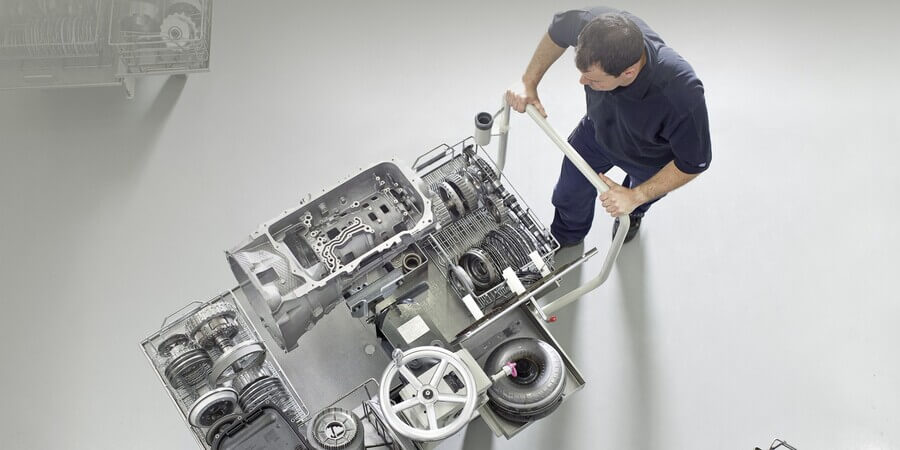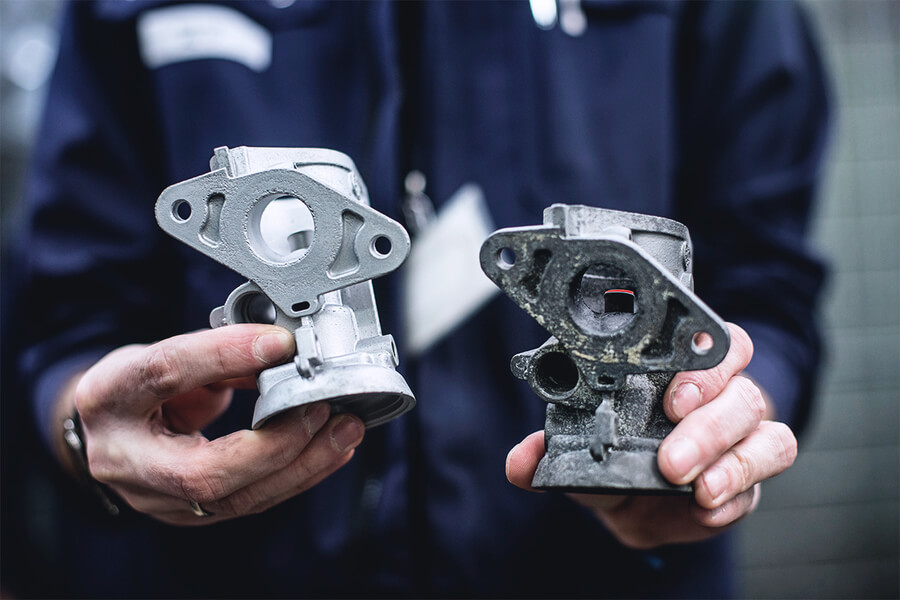
Remanufacturing is not a new concept for the automotive industry. It is 70 years old, but due to the increasing environmental awareness and the sustainability promises made by many key players, remanufacturing in the automotive industry is receiving more attention than ever. At the same time, the sector is facing a significant change in opportunities and risks due to the increasing electrification trend.
Remanufacturing has been shown to lower energy consumption by as much as 80% if compared to making new parts, and the process requires 88% less water and releases about 90% fewer chemicals. In addition to the environmental benefits, remanufacturing provides opportunities to create highly skilled jobs and economic growth. Cars are one of the perfect products for reuse, remanufacturing and recycling throughout multiple use cycles. The auto parts that are eligible for remanufacturing are the engine, gearbox, transmissions, electrics, clutch, batteries, wheels, tires, steering systems or axle systems etc.
Remanufactured automotive spare parts contribute substantially to the EU’s circular economy targets, and in 2020 have saved annual emissions equal to those emitted by 120,000 EU citizens.
Re-FACTORY, part of Renault’s future
At the end of 2020, Renault announced the creation of the Re-FACTORY in Flins, Europe’s first circular economy factory dedicated to mobility with a negative CO2 balance by 2030. The project, part of the Group’s “Renaulution” strategic plan, enables Renault to benefit from a rapidly growing source of value while reaffirming its industrial footprint in France. “With the RE-FACTORY, Flins will become a European reference in the circular economy. RE-FACTORY will enable the Group to respond to the challenges facing mobility and automotive industry players today – and even more so tomorrow. This plant is in line with the Group’s global strategy by combining circular economy, reduction of emissions, development of skills and the creation of new value-generating activities”, said Luca de Meo, CEO of Renault, at the time the project was announced. In January 2021, when presenting the Renaulution strategy, the importance of Re-FACTORY was further reiterated. Part of the newly created Mobilize business unit, the objective of this project is, on one part, to help the group achieve the ambition to attain 0 carbon footprint and, on the other, to offer new maintenance and refurbishment services as part of a unique, accessible and valuable offer to its customers. The Re-FACTORY in Flins (France) will recondition more than 100.000 used cars annually, repurpose Diesel LCV and convert them into biogas and pure EV was stated in Groupe Renault’s strategy. The Re-FACTORY, to be realized between 2021 and 2024 and will be structured around four activity centres whose expertise will support the vehicle’s entire life cycle by acting on the main components of the circular economy (supply, eco-design, economy of functionality, maintenance, reuse, remanufacturing and recycling).
Volvo aims to save EUR 100 million yearly
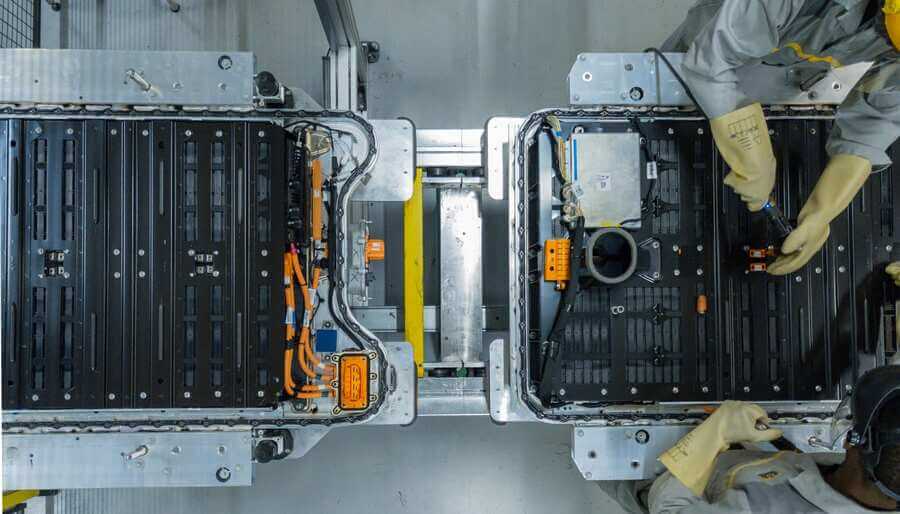
Volvo Cars, a company that will become fully electric by 2030, aims for annual savings of EUR 100 million and reductions of 2.5 million tonnes in carbon emissions by 2025 using circular business principles. By 2040, Volvo Cars will create closed material loops for emission-heavy materials such as steel and aluminium and remanufacture, repair, reuse and refurbish parts. To become a circular business by 2040, Volvo Cars is convinced that every part of its cars should be designed, developed and manufactured to be used and re-used by the company or its suppliers. Now, Volvo remanufactures parts such as gearboxes and engines to use the material better and reduce emissions. In 2020, around 40,000 parts were remanufactured, saving nearly 3,000 tonnes of CO2 emissions. By 2025, Volvo Cars aim to more than double its remanufacturing business. To ensure that valuable material can be kept in circulation, the company recycled 95 per cent of its production waste last year. This included 176,000 tonnes of steel, avoiding 640,000 tonnes of CO2 emissions. With suppliers and partners, Volvo Cars is also exploring the potential in second-life applications for its high-voltage batteries. A current example is the collaboration with BatteryLoop, a Swedish Stena Recycling Group company that re-uses batteries from the automotive industry.
Often confused for recycling, remanufacturing entails rebuilding products to meet the specifications of the original finished product using repaired, reused, and new parts. The process includes the replacement or repair of worn-out modules and components. It can be termed as a form of product recovery that seeks to restore the item to match the same qualities as a new product from the factory.
Faurecia’s aftersales services strengthen the circular economy in the automotive sector
As part of efforts to generate value for all stakeholders across its supply chain, French supplier Faurecia seeks ways to innovate for sustainability for every stage of the product’s life cycle, starting with design, materials used, and manufacturing processes, and ending with their recycling, replacement, or repair, thus developing or strengthening the automotive industry’s circular economy. French and EU waste reduction regulations encourage industries, like repairer shops in the automotive sector, to offer consumers remanufactured or refurbished parts. For over 10 years, Faurecia Service, an entity of Faurecia Clean Mobility, has offered remanufacturing services for its Diesel Particulate Filters to OEMs and fleets. “Leveraging Faurecia’s position as a Tier 1 supplier, we have been remanufacturing DPFs long before EU regulations came into force,” said Teddy Roussel, CBU Director of OES and Faurecia Service. “Today, greater environmental consciousness has acted as an accelerator in demand for remanufactured parts. For Faurecia, developing this business model generates value and opportunities for actors across our supply chain while promoting sustainability.” Although the demand for after-sales repairs predates the covid-19 crisis, two contemporary consumer trends have boosted business: greater environmental consciousness on the one hand and a need to seek less expensive solutions on the other. And remanufacturing is a trend here to stay and accelerate over time, even as resources become scarcer and consumers become more interested in their environmental footprint.