
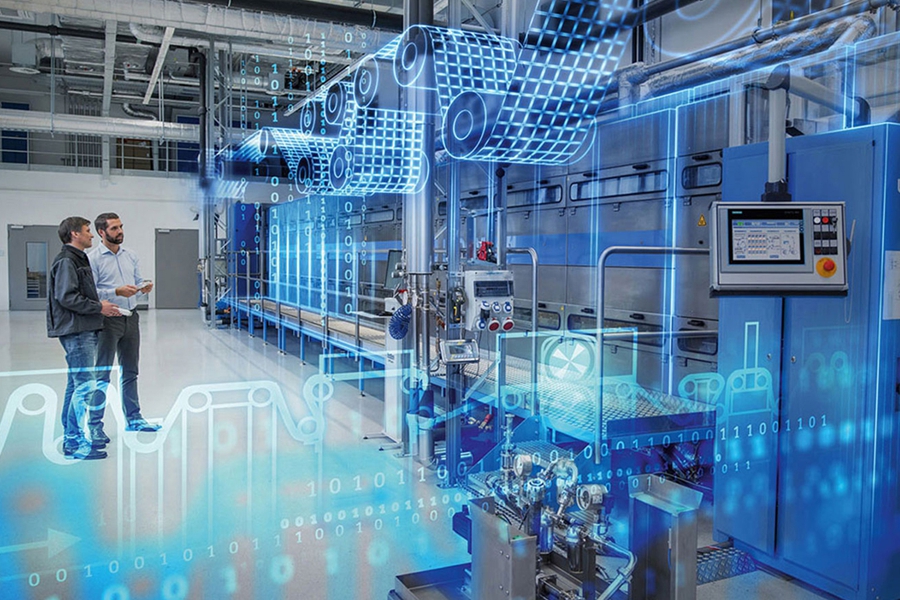
The concept of a digital twin (DT) has been widely recognized for over a decade. It is generally defined as a digital replica of a physical object, person, system, or process, contextualized within a digital version of its environment. DTs enable organizations to simulate real-world scenarios and outcomes, ultimately supporting better decision-making.
In the automotive sector, DTs have unique applications spanning design and development, supply chain optimization, production, sales, and aftersales.
According to the Global Digital Twin Survey Report: Automotive by Altair, in 2023, 76% of automotive respondents reported already leveraging digital twin technology, making it the second-highest adoption rate among 11 industries surveyed, just behind the heavy equipment sector (77%). This is significantly above the overall survey average of 69%.
How are companies integrating digital twins in their operations?
By integrating real-time and historical data with engineering, simulation and machine learning models, DTs offer valuable insights into asset performance and behavior. As vehicle digitization accelerates, the adoption of DTs is poised to surge.
Original equipment manufacturers are increasingly using DTs to enhance vehicle development and production. For example, Ford employs DTs to create virtual prototypes, optimizing aerodynamics and structural integrity during the design phase. BMW uses the technology in its manufacturing plants, leading to improved workflows and reduced downtime. Mercedes-Benz leverages NVIDIA Omniverse to enhance assembly design and operations through DTs. Collaborations such as between Siemens and Intel Corp. aim to advance digitalization and sustainability in microelectronics, while EDAG Engineering partners with Bosch Engineering to combine expertise in DTs and smart factories for customized engineering services.
DTs also facilitate predictive maintenance by monitoring vehicle component health in real time. General Motors uses DTs to track performance and anticipate maintenance needs, ultimately enhancing reliability and customer satisfaction. DTs also optimize supply chain logistics; for example, Toyota employs them to improve visibility and responsiveness to market changes.
DTs integrate data throughout the product development lifecycle, helping to avoid costly mistakes. They create precise replicas of plant assets and supply chain locations, enabling efficient modeling of deals and transportation paths. In autonomous vehicle development, DTs simulate real-world driving conditions. For instance, Waymo uses them to refine self-driving technology, while Valeo and Applied Intuition are developing a platform for advanced driver assistance systems.
In addition, DTs enhance customer insights by analyzing vehicle interactions, allowing manufacturers to tailor offerings and make informed decisions on product features. Simulating customer experiences helps identify potential issues early, enabling proactive solutions and boosting satisfaction. Ensuring functional safety and cybersecurity in the automotive sector is vital due to increasing vehicle complexity. With each new generation containing more code, DTs facilitate reliable testing of all components, from ignition timing to touchscreen interactions.
DTs also support sustainability in automotive manufacturing by enabling remote monitoring and predictive maintenance, reducing waste and optimizing resource use. They facilitate remote control of production processes, minimizing environmental impacts, and help identify inefficiencies for cost reduction. Continuous data analysis allows manufacturers to target improvements and implement changes that lower costs.
Digital Twin Use Cases in Automotive
With a virtual model of each specific car stored in the cloud, the applications of digital twins span across various stages of the automotive lifecycle:
- 3D Car Design and Product Development: Digital twins enable global collaboration through 3D visualization, eliminating delays associated with traditional 3D rendering software and reducing the need for physical prototypes at every stage.
- Capacity and Production Planning: Advanced simulation tools allow for what-if scenario planning to optimize capacity and resource utilization.
- Production Management: Digital twins facilitate the organization of production, sequencing of operations, and real-time monitoring of each component.
- Production Environment Visibility: They simulate and create scenarios of the entire production flow, identifying bottlenecks, inefficiencies, quality issues, and machine availability.
- Regulatory Compliance: Digital twins store lifecycle data, such as regulatory requirements and product passports for EV batteries, ensuring compliance throughout the vehicle’s lifespan.
- Supply Chain Orchestration: Simulating supply chain routes helps assess risks, costs, and CO2 footprints, supporting more sustainable and efficient logistics.
- Human-Machine Interfaces: Digital twins enable the creation of interactive 2D and 3D user experiences for in-vehicle infotainment systems and digital cockpits.
- Autonomous Driving Simulation: They allow the safe simulation of autonomous driving scenarios and real-time visualization of results in virtual environments.
- Training and Guidance: Immersive, interactive experiences empower frontline workers, improving knowledge retention and productivity.
- Sales and Marketing: Digital twins enable photorealistic renders and interactive 3D configurators, enhancing customer engagement pre- and post-purchase.
- Post-Sale Monitoring: They provide opportunities for updates, retrofitting, and monitoring the vehicle even after the initial purchase.
- Digital Twin as a “Sandbox”: Automakers can test the deployment of new functionalities on operational vehicles within a virtual environment, reducing risks and improving reliability.