
Everything about this company in Moldova is unexpected and eccentric in a way. Its name – InformBusiness – doesn’t suggest anything close to what the company does. It has production facilities underground, in a normal office building and a trolleybus line goes from the city’s trolleybus network to the company’s underground, unseen facilities.
There is where innovation happens, R&D is being carried out, laboratory tests are being made and the current production flow almost never stops. This is a company you may have never heard of if you are not from its targeted industry, but it managed to spread its effectiveness into 120 cities worldwide and their public transportation. Vitalie Eshanu, the company’s co-founder and CEO, is also not your ordinary CEO. He sees himself more as an engineer in microelectronics rather than a suited boss with a fancy briefcase. And for the past 30 years, he managed to attract and inspire a team of geeks with brilliant minds. What exactly are they doing that makes this company’s story so intriguing now?
Well, they create the core technology of efficient modern electric public transportation for everything from trolleybuses, trams, trains and even electric busses. And they were also the ones to pioneer the concept of a hybrid trolleybus that uses the wiring system of a city but also has batteries aboard to be able to travel on their energy to more remote parts of the city conglomerations or to historic city centres, where air wires are not feasible.
The electric spark
The company started in 1990, exploring various paths of software engineering and hardware microelectronics in an era when even Windows had yet to be invented. The spark of targeting electric public transport took place in 2000, in a time of crisis for the company’s hometown trolleybus system. It was a period when the municipal service was deep in debt, unable to pay even its current electricity bills.
Vitalie Eshanu met in an instance with the head of the trolleybus company and asked him why they were not taking measures to lower the energy consumption of existing trolleybuses so that the city’s trolleybus system would be able to become sustainable even in a time of crisis. That single question led to a chain of events and laid the foundation for what InformBusiness has become today.
That single question led to a chain of events and laid the foundation for what InformBusiness has become today. Vitalie’s team began to study the matter, and soon they identified that the trolleybuses of that time wasted too much energy in resistors and heat emanation because of the simplistic management of the electric motors, poor recuperation, and old, bulky hardware for the motor management. So, they developed a new module to replace all the hardware and software for electric motor management. The electric motors of the trolleybus stayed the same. Still, the vehicles were getting rid of 1.5 tons of heavy hardware and getting instead a box weighing only 42 kg, replacing all the functions of the removed parts more efficiently.
Reliable suppliers of durable products
Soon after that, Fujitsu approached them in Moldova and proposed to supply the necessary parts to the company’s concept to have the utmost reliability in operation. And since the requirements for public transport are quite demanding, as it must operate from -40 to +60 degrees Celsius, the InformBusiness team considered that they should indeed source their parts only from the most verified and reliable suppliers, to be able to grant durability and reliability in time. As a result, they started buying parts from Fujitsu, and then also from Hitachi, Mitsubishi, Baumer. The process of retrofitting trolleybuses in their hometown continues, and their efficiency has intrigued many more managers from neighbouring countries. The city of Vinnitsa in Ukraine was the first that contact them and became the first city where they exported the concept in 2003. The first 16 trolleybuses were transformed in two weeks. And the interest continued to grow from more and more cities. In 2004, for example, they installed their continuously upgraded system in the first 18 trolleybuses of Sankt Petersburg, Russia. All those 18 vehicles are still in operation today, after 17 years, without any major reliability issues!
From north to south and from east to west
That is how they became suppliers of such systems for retrofitting old trolleybuses, but also fitting the new ones, directly from the factory or when they are delivered to a certain city. Company’s systems are delivered nowadays to trolleybuses manufacturers in Ukraine, Belarus, Russia and, through intermediate suppliers, to others around the world. Today’s geography of trolleybuses that have the Moldovan’s company concept and parts comprises 120 cities around the world. The northernmost is the Arctic city of Murmansk. The southernmost city is Bishkek in Kyrgyzstan. The most eastern city with their system is Vladivostok and the most western is San Francisco, through an intermediate supplier.
The concept of hybrid trolleybus
The small company also sells a similar concept of efficiency to electric locomotives and trams, but meanwhile, it was also the one to further innovate in an unexpected way, by pioneering the hybrid trolleybus. It has also appeared to be necessary to connect its hometown suburbs with the central city while avoiding the huge cost of installing new electric landlines over tens of kilometres. They thought that a solution for trolleybuses would be more ecological and more cost-effective in operation, providing cheaper means of transportation for the public. The efficiency gains for the first 3 trolleybuses retrofitted in 2001 were huge: 35-40% lower overall energy consumption! So, they came up with the concept of installing a battery pack in the back part of a trolleybus, that would provide the storage for the energy required to travel for several tens of kilometres with the poles down.
The concept needed to provide 20 km of autonomy, but their system had 60-70 km of real-life autonomy. And the best part is that such a trolleybus doesn’t need additional time to recharge its batteries – they are recharged on the move once the poles are reconnected, and, of course, energy recuperation is used to help the recharge process. This concept has also evolved in the past years.
Now it uses LiFePO4 batteries. There are 160 blocks in the battery package, each weighing 3.3 kg. So, the total weight of the batteries is 528 kg in total. Comparing these numbers to the most advanced solid-state batteries in electric buses, we would see that, for example in a Mercedes e-Citaro, the total weight of those solid-state batteries is 3,150 kg, which is 6 times higher. So even the most advanced electric busses are less environmentally friendly in rational for urban use, compared to trolleybuses or these hybrid trolleybuses. And the consumption of such a hybrid trolleybus is about 75-95 kWh/100 km, which is significantly lower than an electric bus’s consumption. That is how hybrid trolleybuses, pioneered in Chișinău, multiplied in number of 60 units in the company’s hometown and 600 units worldwide in more than 30 cities.
Investing in R&D and innovation
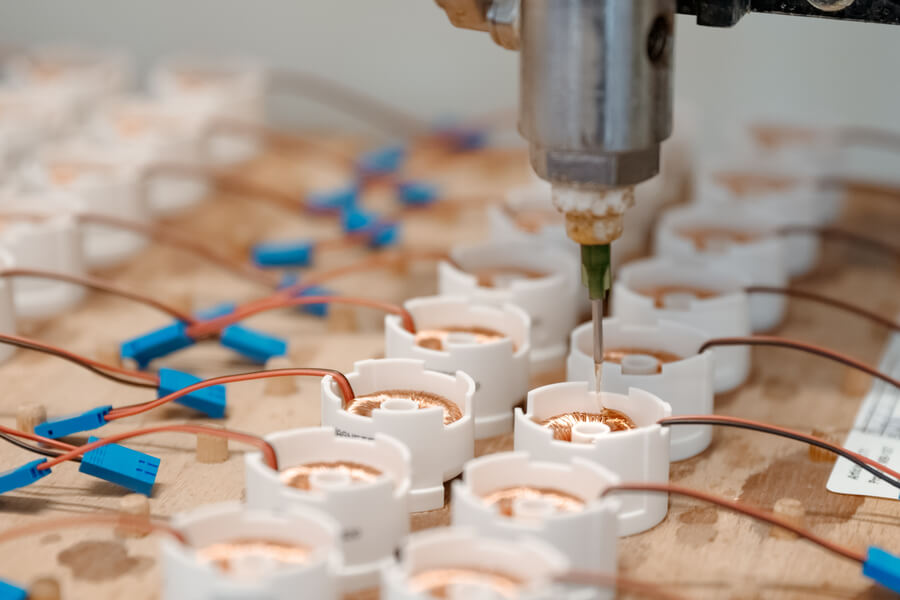
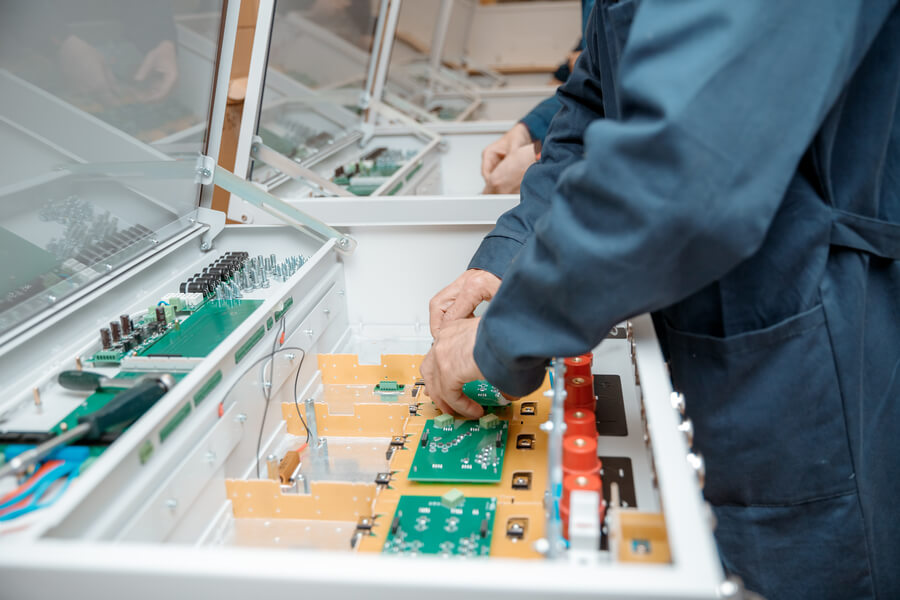
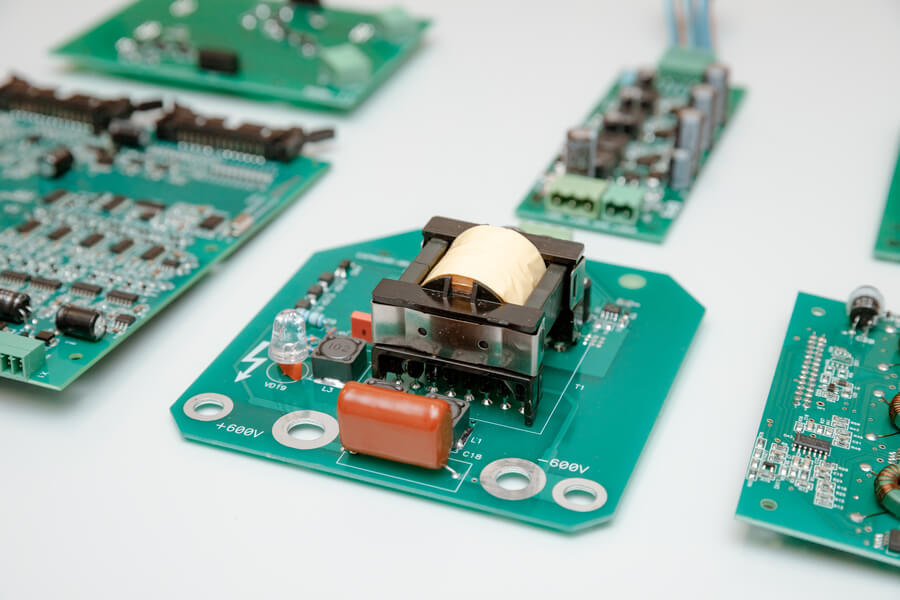
But the Moldovan small company continues to target new innovations, and now it is the R&D partner and future supplier for the MAZ factory in Belarus in developing a compact electric bus of the 9 m class. Those are battery-only electric buses, and their use is more justified in small cities around the world, up to 200,000 inhabitants. There are virtually no electric buses offered in this segment now on the market, but there are many more cities with lower populations in the world that would prefer emission-free public transport at a lower cost than larger electric busses and a lower cost to switch than that of constructing a trolleybus system. Moldovan company targets a larger battery package of even more performant batteries, granting a real-life autonomy of up to 300 km, more than enough for a day’s operation in a small city. And all the production is being carried out by a relatively small team on an underground floor of an office building. Parts are being bought from renowned companies, sometimes, a part is engineered here, and the production is being done at a specialized company, like a special radiator, for example, which is manufactured in Sweden for their systems. There is also a laboratory with trolleybus electric motors paired in two so that they can provide resistance as in a real-world scenario with a fully loaded trolleybus. Every relevant aspect can be tested here, and every product is tested before delivery. Of course, a manufacturer warranty is provided, and even an extensive optional warranty contract is possible so that companies and cities acquiring the company’s systems can be confident in the reliability of those systems and – even more important – be confident in the avoidance of days of stalling without operation. The quality of the parts in the systems assembled by the company is seen with the naked eye. It all seems hi-tech in the concept and architecture of those systems, but it feels as if they were built with a military-grade implanted endurance for decades of use. And since we all agree that electric mobility is the mandatory future for transportation, no matter how the energy aboard will be stored, produced or sourced, the future of a company that engineers systems to manage electric mobility looks brighter than ever.
Besides that, InformBusiness already delivers systems to larger electric buses built by MAZ, which is also present in the more common 12 m class.