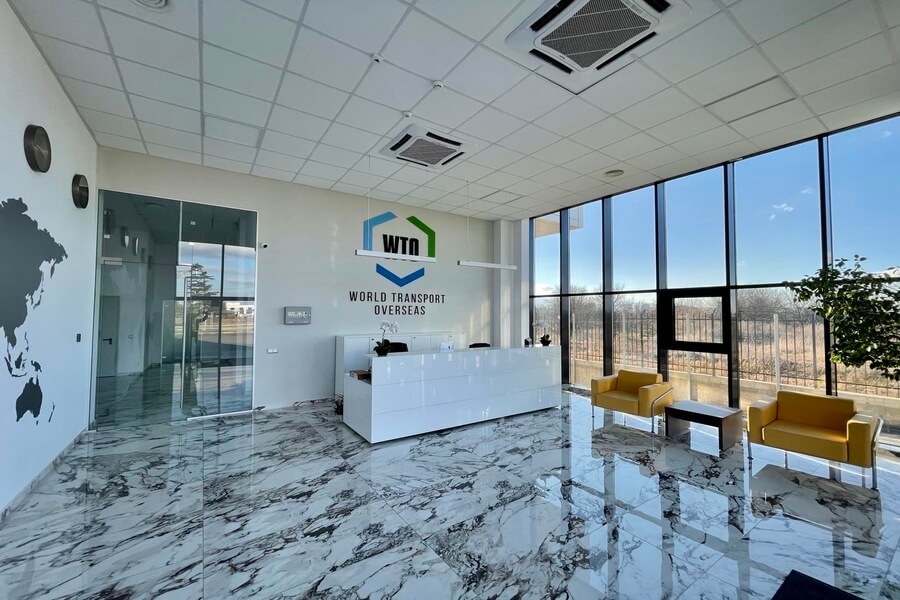
World Transport Overseas (WTO) can look back on over 2 decades of success in the freight forwarding industry. The company has its own offices in Bulgaria, Albania, China, Croatia, Greece, Kosovo, North Macedonia, Romania, Serbia, Slovenia, Taiwan and is eyeing further expansion in North America and other countries in Asia and Europe.
WTO was founded in 2001 by its CEO Nikolay Nikolov, who managed to build one of the fastest growing freight forwarding companies in Eastern Europe.
We interviewed the Managing Director of WTO in Bulgaria Svetlin Peshev, a logistics professional who joined WTO in 2013 with almost two decades of experience in the industry at the time, at his office in the company’s HQ in Sofia, Bulgaria and we had an opportunity to learn more about the expansion strategy of WTO, future plans, the turmoil in the ocean freight market at the moment and how the company adapts to this.
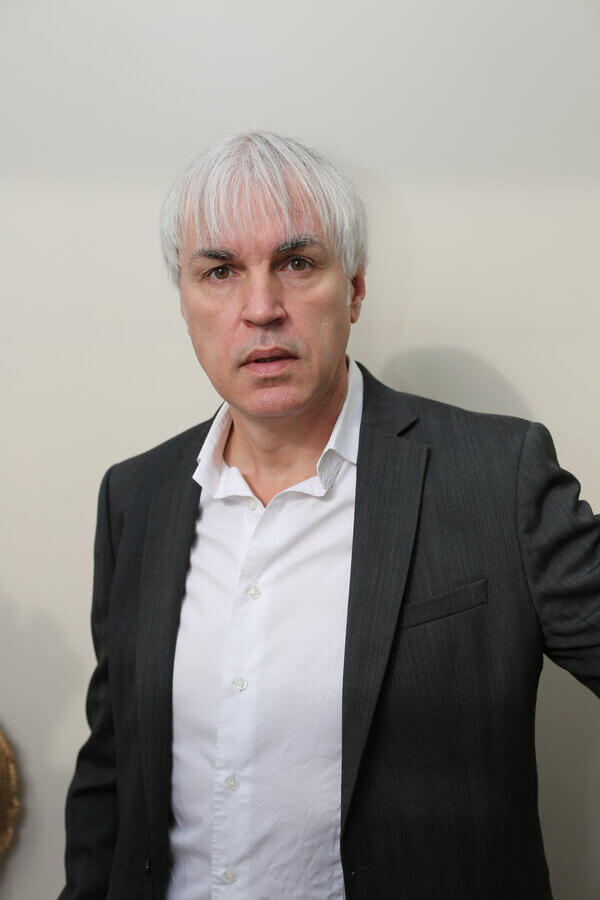
The company’s business philosophy is simple: “customers appreciate most the partners who can solve issues. They don’t only relate to our portfolio or to our services, but to how we solve the problems when they occur, how reactive, engaging and quick we are in such situations. I think that is making the difference between one partner and another partner in our industry.”
“When working on our expansion strategy, we are looking for a few things, and one of them is trying to create synergies between the new companies we are opening and the companies we already have running. Another factor is if the potential of the market is so great that we just need to be there, even without the synergies with other branches.” – Svetlin Peshev, the CEO of World Transport Overseas (WTO).
Intermodal&Logistics: How would you describe the ocean freight market at the moment?
Svetlin Peshev: At present, the market is extremely weak. It has not been so weak for a long time and there are two factors playing in. One is the demand, which is not growing as quickly as it was supposed to be growing. If you look at the global GDP growth in 2023, it’s plus 3%, and then the TEU market is growing by less than 1% at the same time. So, the demand is the container business is actually not catching up with the GDP growth.
But the main issue is the growth of the supply. There are more vessels, more capacity being released, and more capacity to come into the market in the next years.
There is a very large disbalance between supply and demand which has already happened. But it’s going to expand further during the course of next year, as many analysts indicate.
With the new regulations for CO2 emissions imposed by the EU – the ETS coming into place in 2024 and the CBER, the consortia block exemption regulation for shipping lines expiring in 2024 also, there are a lot of factors impacting the market.
This is a very difficult time for ocean freight, and the market context will probably continue also next year, because I don’t see what is going to change, frankly.
Intermodal&Logistics: What changed in your business model as a result of the turmoil in the ocean market, at the moment?
Svetlin Peshev: As a business model, until now we’ve been mainly focusing on our organization, optimization of processes and our portfolio of products, e.g. on what kind of product to invest in and how to make it more competitive.
And we’ve been focusing very much on LCL, which has been the main product in our portfolio, expanding the scope of our services, making direct services whenever possible, instead of transshipment services. For example, for many consolidators, they choose one hub in Asia (e.g. Singapore or Hong Kong), and they transship everything in that hub.
For us, whenever we see a possibility, a potential to open a direct service from Asia, we make it, whether is from Shanghai, Ningbo, Shenzhen, Qingdao, Xingang, Busan, Xiamen, Taiwan or India.
Now we’re focusing on expanding the availability of destination CFS’s/hubs on the Balkans peninsula and in the Adriatic. Varna and Koper have been our main hubs for years, then we opened Sofia years ago, where we have predominantly cross-docking operations. A few years ago, we opened Thessaloniki in Greece, and then Piraeus, now Skopje and Constanza.
At the same time, because the Asia-Europe, a trade we have been very actively engaged with since the beginning, is not doing so well at the moment, this year we focused our attention even more on developing the export business as well as other import trade lanes, on new customers and new trades, commodities and even some B2C offerings, which we are working on.
Intermodal&Logistics: In the Balkan area, where WTO is very present, what would you say is the most dynamic market or has the most potential?
Svetlin Peshev: Probably our WTO scenario is not necessarily the scenario which is representative for the whole market. But from our perspective, the investments we have already done are showing more or less how we perceive the market.
Romania is important for us, because from the markets we are present in this region through an own office, is the largest, together with Greece.
It would be a shame not to be in Romania. And we have a lot of synergies between Romania and Bulgaria. We have only recently opened a direct consol service to Constanza (following the inauguration of WTO Romania in 2022), and the reason we delayed that was because of the crisis with Ukraine and how congested the port was during the last almost 2 years.
But for me Romania is a more mature logistics market than Bulgaria and is an important market with all the automotive industry and investments done. There is more access to resources in Romania, also including human resource.
Then for us, very interesting has become Kosovo, for example, and Albania, because these are fast growing markets with very young population.
And also, for markets such as Kosovo or Albania, consolidation by sea is a relatively new product. It’s not so well known on the market. Our task on these markets as a market leader on the Balkans is to make this product available and easily accessible to the customers, to explain the benefits vs other options and then to deliver in line with our promise.
Intermodal&Logistics: What are your plans for expanding the business in the near future?
Svetlin Peshev: We are expanding in China, where we already have offices in Shanghai, Ningbo, Chongqing and now we are opening an office in Shenzen and the next one will be in Beijing.
North America – USA was also on the plan for this year, but we had to postpone a little, because we are looking for the right setup there, right people mainly, as in our business people are the most important. USA is an important market, as there is a lot of freight traffic between our area and USA and as such hopefully next year we will be there. Probably we’ll start with an office on the East Coast, but we need to have a strong setup (own office or a very reliable partner) on the West Coast too, because it is critical for our organizations in Asia (China and Taiwan for the time being), who are growing their volumes in the Transpacific trade.